Tuesday, January 24, 2006

Myths about Confirmation

Pastor Borghardt (of Bloghardt's Reflector) has posted "8 Myths About Confirmation".

I will paste them here, but please visit his site for comments:


Eight Myths about Confirmation


Here are eight false thoughts or statements that I've heard in my short time as a pastor. There are tons more. These are the ones

1. "I have a right to be confirmed." - Confirmation is a church rite, not a right given to all kids when they reach a certain age. Being taught everything our Lord mandated is not easy, it's very difficult. It takes study. It takes commitment. It even takes memorization. They are given to hear the Gospel.

2. "Confirmands today can't memorize." - Yeah, they do. They can. They just don't want to. They memorize passwords, the lyrics to their favorite songs, facts for school, and even phone numbers. The question is not, "Can youth memorize?" but, "Will they?"

3. "The material is boring" - My youth never cease to amaze me. This year, I decided to cut them some slack on their memory work. They work so hard and they were getting behind. So, trying to be a good guy (which is my sinful flesh), I decreased some of their work. Initially they rejoiced, then they showed up the next week having memorized more than I asked them to do, AND excitedly asked for the next section early.

Imagine that! They love to hear and read and memorize more and more about what Jesus did for them on the Cross and delivers to them in the Lord's Supper. Faith desires more and more gifts.

4. "Don't overload the kids, just give them the basics." - The way of faith is the way of wanting always more. There is never enough, never a limit, never a point in which the confirmands should sit back and say, "That's it, I've now learned all I need to know."

The more their pastors put into them, the more they learn. It's a crazy idea, but it's true. As pastors we are mandated to teach everything that the Lord has commanded. Why not do that while we have time?

5. "We should confirm kids who aren't coming to church because they might start again afterwards." - If they aren't coming to church now, they won't come to church after confirmation. Part of confirmation is learning about the Third Commandment.

6. "We must confirm at " - If Dr. Luther can speak with great certainty about how seven-year olds can know what the Church is, why not confirm earlier? If the Lord's Supper truly does deliver eternal life and salvation to our kids, why do we wait so long to deliver it to them?

7. "Parental participation is optional." - Oh no, no, no. Confirmation is not like having your oil changed, where you just drop off your car and let the mechanics do the work. Parents cannot simply drop their kids off to church and expect Pastor to do everything. It is given to each parent to teach their kids the faith. Parent participation is required.

Last class, one of my kids showed up sick. His mom caught me before class and explained his attendance this way, "He was feeling sick, Pastor, but I told him to pop a few Tums and buck up and go – this is confirmation." What a confession! In confirmation the Faith is taught to her son. She didn't want her son missing anything.

8. "No visitors in confirmation classes." - Why? I let my high school sit in class and listen. Why should confirmation stop with confirmation? Why not more give us more! Parents can come too!

Monday, January 23, 2006

Sermon - Epiphany 3 - Johan 3:1-5,10 (Life Sunday)

Epiphany 3, “Life Sunday” – January 22nd, 2006
Jonah 3:1-5, 10
“A God of Life”


I. Introduction –
There are many aspects of the true story of Jonah that are worth thinking about. Most of us know the Sunday School basics – that God called Jonah to preach, Jonah ran away, and ended up as “fish food”. God then had the fish spit Jonah out on dry land – safe and sound (if a little smelly) – and renewed his instructions for Jonah to go and preach. That’s where our Old Testament reading picks up today.

What many forget, or never learn about the book of Jonah is the reason WHY Jonah was so reluctant. God was calling Jonah to preach in Nineveh, the capital city of the Assyrian empire. And Jonah knew full well these were not nice people. I have often called them the “Old Testament Nazis”. The Assyrians were notorious for wartime atrocities, including rape, pillaging, torture, and even cutting open the bellies of pregnant women.

Jonah knew that if he was sent to Nineveh, and preached God’s word, and if the Ninevites repented, that God was a merciful God who would relent from his judgment, and forgive their sins. Jonah didn’t want to see that happen. He wanted to see fire and brimstone rain down on Nineveh, like they did when God judged Sodom and Gomorrah. He didn’t want Nineveh to be forgiven. But Jonah is made the fool by the end of the story, as God asks the rhetorical question, “Nineveh has more than a hundred and twenty thousand people… should I not be concerned about that great city?” It seems Jonah too had something to learn about the value of God’s gift of life.

II. We Who Debase the Gift of Life
Today, January 22nd, is an infamous anniversary. Our nation marks 33 years since Roe v. Wade, a Supreme Court decision effectively legalizing abortion. Since then, some estimate 47 million abortions have been performed, and continue today at a rate of 146 per hour, or one every 25 seconds. For every 1000 live births, we are told there are 306 abortions. And over 140,000 of these annually are during the 2nd or 3rd trimester. While some progress has been made in eliminating this sinful and barbaric affront to God’s gift of life, our nation as a whole still has much to answer for when it comes to the sin of abortion.

Perhaps you personally know someone who has had an abortion. Perhaps you personally have had an abortion. One of the least talked about effects of abortion is the heavy burden of guilt it brings. We well know it is sinful. We know, deep down, it is terribly wrong. Many women who have abortions suffer under the weight of this guilt for years – struggling with depression and even showing higher rates of suicide. But there is another secret which is not told often enough. There is forgiveness in Christ.

Yes, the same God who could forgive even the Ninevites, those wicked people – can forgive us even the sin of abortion. If you know someone who carries this burden of guilt – don’t be the reluctant Jonah who withholds God’s forgiveness. If you are someone who has sinned in this way – then hear now from this called and ordained servant of the Word that Christ offers forgiveness – yes very much to YOU! His blood shed at the cross covers all sins – even the sin of abortion. So great is his abounding mercy.

But not all of us have such personal concerns about the sin of abortion. This doesn’t let us off the hook, though. We humans are inventive when it comes to debasing God’s gift of life. Sin takes many forms, no less sinning against the 5th commandment. “Thou Shalt Not Commit Murder” says God through Moses.

Luther asks, “What does this mean?” and answers:
“We should fear and love God that we may not hurt or harm our neighbor in his body, but help and befriend him in every bodily need.”

This means there are other ways of sinning against God’s gift of Life:
· Physically harming our neighbor in any way (by our actions)
· Failing to help when we can (by our inaction)
· Disrespecting God’s role as giver (and taker) of life
– from cradle to grave (or from womb to tomb)
· Treating our own life with less value than God means for it – even to such things how we handle our health – not eating well and exercising enough.
· Doing those “little things” which tear away at life, contribute to our culture of death, and fail to appreciate our creator’s handiwork.

The gift of life is one of God’s most precious to us. For in it, he has created us in his own image. We are reflections of him. All human life is therefore precious to God, and worthy of our care. And for all the ways we sin against human life, we need, like the Ninevites, to repent of our wicked ways.

III. A God who Gave His Life
And Just as God showed mercy to the Ninevites, God shows mercy to us. They didn’t know their forgiveness was based on the work of a Christ who was yet to come. We know ours is based on the Christ who has indeed come! Jesus tells us the very reason he comes in John 10, “I have come that they may have life, and have it to the full.”

Jesus is the God of life who gave his life to ransom our lives. He gave his life on the cross to deal a death-blow to death. He gave his most precious life to bring us the precious gift of life in his name.

Jesus goes on to say of his life, “No one takes it from me, but I lay it down of my own accord. I have authority to lay it down and authority to take it up again.”

And we know that he has such authority over life and death because death could not hold him. We see his authority over death in the empty tomb of Easter. And there, with the stone rolled back and the grave left behind, we see a glimpse of our new life too. His authority over death and life is not only for himself, you see, but for our benefit too!

IV. A God Who Gives New Life
Christ brings new life.

He brings us a future that goes beyond the seeming end that is death. In a world that teaches such uplifting sound-bytes as, “Life stinks, and then you die”. Jesus brings true hope. Death is not the end for us. There is more. A blessed, eternal, wonderful existence – LIVING – with God forever.

This means not just a dis-embodied existence as some ephemeral spirit. The Christian hope is in the resurrection of the body – yes, that’s OUR body – as we confess in the Creed. “Though my skin be destroyed, yet in my flesh I shall see God”, as the book of Job reads. The final hope of Christians for the future is a physical eternal life in a re-created, resurrected body!

But that life that Jesus brings is more than just a future hope. Eternal life, for the Christian, begins not when we die and go to heaven – it begins in the waters of baptism, as we are reborn in the Holy Spirit. Our life with God, our eternal life, is something we enjoy even now – though we will see it even more fully in the new heaven and new earth.

We might say as Martha did at the tomb of Lazarus, “yes, Jesus, I know about the…resurrection at the last day."To which he would answer us as he did her, "I am the resurrection and the life. He who believes in me will live, even though he dies; and whoever lives and believes in me will never die.”

As we lament a particular day, 33 years ago, in which human life was dealt a mighty blow – let us also turn from our sins against God’s gift of life. And let us remember a day 2000 years ago, in which sin and death itself were dealt the final blow. As Jesus gave his life for ours, and brought new life in abundance, may we ever treasure the precious gift of life – life here, and life to come – life in his name, forever, Amen.

V. Conclusion
As sinners who misuse, abuse, and debase God’s precious gift of life, we need to hear about the God who gave his life for us, that we would be forgiven, and have new and eternal life in him.

Friday, January 20, 2006

Truth or Fiction?

Twice this week I have received emails from friends or family that were forwarded from another source, and made a claim that seemed somewhat suspicious to me. In one case, the person said, "I don't know if this is even true, but I thought I would pass it along anyway."

I have found a most useful website: TruthOrFiction.com (and added it to my links on the left).

It's a neat little site that works well for all sorts of hoax-busting, especially of the forwarded email variety. Check it out.

Tuesday, January 17, 2006

Blogroll

One of the insights I gained from our Blogger Conference here in Ft. Wayne was the importance of one's blogroll. I hadn't considered the impact of these on search engines. Before, I only listed my very favorite blogs on the sidebar (for simplicity). But thanks to Pastor Snyder of "Ask the Pastor", I understand better the benefits of linking to others.

So in that spirit, I have updated my sidebar to include not ONLY my favorite blogs, but the entire listing of Confessional Lutheran blogs found on Pastor Snyder's site.

In Ft. Wayne


I have arrived in Ft. Wayne for the Symposium. My first one this year, I am only staying fot the first part (the exegetical symposium). Seems like it will be a good time.

Last night was the very first "Confessional Lutheran Bloggers Conference", in which we heard from speakers: Pr. Walt Snyder, Pr. Eric Stefanski, Dr. Gene Veith, and Technophile Jason Evans. It was some good discussion, but there could have been more attendees! Look for the online recording of the event to come out soon.

Sermon - Epiphany 2 - John 1:43-51


Epiphany 2 – January 15th, 2006
John 1:43-51
“Found, Known, Believed”

I. Introduction –

This week and next, our Gospel readings find Jesus very busy calling disciples to follow him. Next week, we have the fishermen- Peter and Andrew, James and John. This week, Phillip and Nathanael. I think these accounts are not only familiar to most of us, but they are near to our hearts. We can relate to them, because Jesus calls us to follow him too. And our following is often very similar.

As we see the disciples following, as we think on our own following, and as we see the key words in this text, we see that following involves some finding, some knowing, and of course, believing. But maybe not the way we think…

II. Found

In the first couple of verses, there’s a lot of “finding” going on. First Jesus finds Philip. Then Philip finds Nathanael. Then Philip tells him they have found, essentially, the Christ! But as enthusiastic as Philip was, as eager to go and tell and share his great news, he was wrong.

Oh, sure, Jesus was the one written about by Moses and the prophets. But did you notice he called him “Son of Jospeh”. That wasn’t really the case, was it. How could Philip know, though, that the man he was about to follow was really the Son of God?

And Philip was wrong when he said “WE have found the one…”. No, we just read that it was Jesus, who, in fact, found Philip. But it’s often that way with us modern disciples too. We make the same mistake. We think we find Christ. No, rather, he finds us.

After all, we are the ones that are lost. We are the ones that don’t know our way, because we have turned away from God in our sin and gotten hopelessly lost in a maze of corruption that is handed down from generation to generation. We are often so lost, we have no clue how lost we are.

And so it’s no small thing that Jesus found Philip. And it’s no small thing that he finds us too. He finds us in our baptism. He finds us through his word – calling us to repentance and faith – over and over again.

Finally, we will speak well of Philip on this count – when Jesus called him to follow, he did. And Philip knew that following meant bringing others along. He found Nathanael, and brought him to Jesus. And Jesus, through Philip, and again through his word, would “find” Nathanael too.

III. Known

Nathanael seems to me like a bit of a know-it-all. He certainly doesn’t come off well with his condescending comments about Nazareth. But Nathanael knew that Nazareth was a backwater town. He didn’t expect anyone who knew much about anything to come from there – much less the very Messiah they had been waiting for. “Nazareth! Can anything good come from there?” he asked, and expected the answer was “no”.

But little did he know, it was, “yes!” Jesus Christ, Son of Man and Son of God comes from there. And what little Nathanael knew about Jesus seemed all the less, compared with what Jesus knew about him.

Though Nathanael had as much as insulted Jesus, or at least his home town, Jesus meets Nathanel and compliments him, “Here is a true Israelite, in whom there is nothing false.” Jesus knew something about Nathanael! What did he mean by that, “A true Israelite in whom there is nothing false”? Well he didn’t mean Nathanel was without sin. He didn’t mean Nathanael didn’t’ need a Savior. Likely Jesus was commending Nathanael’s proper Old Testament faith in the Christ who was to come. Nathanael knew his scriptures. He knew what Moses and the prophets had written about the “one who is to come”, that is, the Messiah. And now, to his great surprise, he was meeting him.

Nathanael is surprised that Jesus knows him, and Jesus shocks him all the more by mentioning the fig tree. Here Jesus demonstrates a knowledge that no mere mortal could have had. He saw Nathanael, he knew Nathanael before he could have seen him. And he knew Nathanael better than the disciple knew himself. Nathanael had much to learn.

Isn’t it this way with us, too? We are often know-it-alls. We think we know our needs, we think we know what God wants from us. Even some Christians seem to think they learned it all years ago, and have nothing to gain from continued study of God’s word. As if 8th grade confirmation is the end of our faith learning.

Or maybe some who read the bible, study it, attend various classes, perhaps become prideful of our biblical knowledge, as if knowing enough will somehow save us. It won’t.

It’s so easy to sin. It’s our nature. But Jesus knows our weakness. For Jesus knows us better than we know ourselves. He knows our needs better than we do. He alone knows how to do the saving. And he does it. And it’s not by seeking him that we are saved. And it’s not by knowing-it-all, or even knowing enough, it’s believing.

IV. Believed
Nathanael states his faith – his trust – his belief in Jesus. Jesus is more concerned about peoples’ faith than their knowledge anyway. So often he comments on someone’s great faith. So too with Nathanael. He doesn’t say “you’ve found me” or “you know me”. He says, “You believe me”.

Nathanael’s great confession here, is right up there in the top ten, along with Peter’s great confession, “You are the Christ, the Son of the Living God!” and Thomas’ “My Lord, and my God!”. But Nathanael’s statement of faith was given right out of the gate. Peter’s great confession wasn’t until Jesus was well into his public ministry. Thomas’ was after the Resurrection. So for Nathanael to express such profound trust, and to make such a confession even as he was being called as a disciple – is truly remarkable. It is another hint that the faith he speaks comes as a gift – from the one his faith is in.

So too, when we confess with our lips and believe in our heart that Jesus Christ is Lord – we do not speak on our own. We speak by the power of His Spirit given in our baptism. We speak the words he gives us. We say what he has already said to us, and for us. And we say it, like Nathanael, in faith.

Jesus then goes on to say, in effect, “You aint seen nothin’ yet!” Nathanael would see “Heaven opened, and angels ascending and descending on the Son of Man”. What a strange thing for Jesus to say… But Nathanael likely knew what Jesus meant.

In the Old Testament, which Nathanael knew well enough, there is the story of Jacob, the patriarch. One night while sleeping with his head on a rock, Jacob had a vision of a ladder to heaven, and angels going up and down. He names the place Bethel, meaning, house of God.

What Jesus is saying is, “Nathanael – I AM JACOB’S LADDER” and, “I AM the way to heaven”. And in the next few years, Nathanael and all Jesus’ followers, would see heaven opened to them – and to the world – in Jesus. And we see it too…

Perhaps we see it most clearly at the cross. Nathanael called Jesus, “Son of God and King of Israel”, but at the cross, we see him called “King of the Jews” in a sarcastic Roman fashion. There at the cross, heaven was opened - so that God’s wrath could be poured out on his only Son. And as Jesus bears our sin, and suffers in our place, Heaven is open to us. When, “it if finished”, that cross becomes our ladder to an open heaven. The sign of execution and shame and death becomes a symbol of hope, and comfort, and life.

In this Nathanael believed. This we believe, this we teach and confess. Jesus Christ crucified. He who finds sinners like us. He who knows our deepest needs. And he who opens heaven to us by his death and resurrection, and through the faith which his Spirit creates in us.

Found by Christ, Known by Christ, Believing in Christ, “The Son of God, and King of Israel”. In His name, Amen.

V. Conclusion
Jesus finds Philip, knows Nathanael, and they believe in Him. Let us also believe in the one who finds and knows us – and who opens heaven for us, Jesus Christ, our Lord!

Saturday, January 14, 2006

Duet

Here is an MP3 of myself and Richard, one of our Elders performing the hymn "Treasured by the Virgin Mary" that I wrote. The lyrics can be found here. That's me singing the higher part (melody).

The instrumentation for the piece was written by his son, Jonathan. Accompanying us were Jonathan on violin, Samuel on Cello (his sons), and his wife Susan on keyboard.

Monday, January 09, 2006

Phelps At It Again!

This AP story ran on the front page of our local paper:

Debatable -- Should protests at funerals be banned?

(excerpt):

MILWAUKEE - Some of the people who attended Sgt. Andrew P. Wallace's visitation weren't there to remember the fallen soldier.

Instead, the members of a Kansas-based church said his death was God's revenge on a nation that accepts homosexuality, and they carried signs that read "Thank God for dead soldiers."


I sent the follow comments to the Opinion Page Editor:

I write regarding the front-page story on Monday, January 9th
about the Westboro Baptist Church protesting at the funerals of soldiers.

Whether or not such protests should be outlawed by the government,
or how they should be restricted may be a debatable question.

But what is not debatable is that common decency condemns such
inappropriate protests.

Christians are taught to speak the truth, but to do it in love (Ephesians 4).
Rev. Phelps and his associates are notorious for their unloving,
in-your-face, grandstanding demonstrations on this issue. They do
not speak for the mainstream of Christianity, or even for the vast,
vast majority of conservative Christians.

While faithful Christians who regard the Bible as God's word must
also regard homosexuality as sinful, there is a time and a place and a
manner for this truth to be told. The funeral of a fallen soldier,
gay or straight, is not the proper venue.

Rev. Thomas Chryst
Associate Pastor
Grace Lutheran Church, Racine


Sermon - The Baptism of Our Lord - Mark 1:4-11


The Baptism of Our Lord – January 8th, 2006
Mark 1:4-11
“The Voice from Heaven”


I. Introduction –
A few words about Epiphany…
It’s one of those words we don’t use around the water cooler. Epiphany means “appearance” or “manifestation” or “revealing”. It is the post-Christmas season in which the church dwells on just who it is that has appeared among us. Throughout the Epiphany season, we will be progressively unveiling more and more about this Jesus. Today as we read of Jesus’ Baptism, we hear the voice from heaven, which says, “This is my son” . At the end of the Epiphany season, we find ourselves on the Mount of Transfiguration, and again the voice declares, “This is my son.” What a wonderful way to summarize the meaning of Epiphany. Book-ended by the voice of God.

The actual day of the Epiphany of our Lord, celebrated on January 6th, is also known as the Gentile Christmas, and we recall the star that brought the wise men to worship the Christ-child. We modern worshippers of the Christ would be wise men too, by recalling and appreciating his appearing. Today, we turn to Christ's Baptism...

II. A Burning Question
I think many, maybe most Christians who first read this account of Jesus’ Baptism, and have a basic understanding of who Jesus is, are left with a burning question. Why is Jesus, sinless, spotless Lamb of God that he is, getting baptized? Isn’t baptism for forgiveness? What’s going on here? Does Jesus need to be forgiven? For what?

Now, you and I, that’s a different story. We need our baptism. We are sinners. We are born in sin, we live in sin, we love to sin. We wallow in it like pigs in mud. We need a good washing off. So Christian baptism, a gift of God, a holy sacrament, cleanses us from the soil of our soul. We who are baptized stand clean before the Lord – pure – sinless.

Baptism for us is also more than a temporary fix. It’s not like an earthly cleaning that has to be done over and over. Like brushing your teeth every morning because they don’t stay minty-fresh for long. Like the endless tasks of washing dishes and washing laundry. Like my wife and I doing our daily picking up after the kids. NO! Baptism is entirely different.

Baptism is a “washing of rebirth and renewal”. When Jesus speaks to Nicodemus, he says baptism is being “born again”. So we who are baptized – ARE BAPTIZED. It is an action of God which recreates us to be something entirely different than the sinners we once were. And day after day, we return to those baptismal waters – reminding ourselves of God’s promise and his love and our status as his beloved children. We are free from sin, by God’s grace, given in this precious way.

But that still doesn’t answer why Jesus got baptized. One clue is in Matthew’s Gospel, where John protests – “I need to be baptized by YOU, Jesus!” But Jesus answers that it is fitting to do so now, “in order to fulfill all righteousness”. And here is the key.

Righteousness comes to us only through the work of Christ as our savior. He wins it for us, as well we know, at the Cross – where he died for our sins. This was important! But also important was Jesus living the perfect life for us. In fact, if at the cross he dies in our place, everything that leads up to the cross is Jesus “living in our place”. He “fulfills all righteousness” by standing in the place of sinners. Here now, he publicly identifies with us sinners, by standing in our place – in the baptismal waters of the Jordan.

And as much as our baptism takes our sins away, Jesus’ baptism does for him quite the opposite. He, the sinless Lamb of God, in a sense, here takes on our sin – and will carry it, eventually, to the cross. Jesus’ Baptism – such an important event – is the first step, in a way, toward Calvary.

III. A Trinitarian Event
Another indicator of this event’s great significance is the glaring presence of God in all his Triune fullness. Father, Son, and Holy Spirit all come together in a profound way here. Jesus, of course, the voice of the Father, as well as the descent of the Spirit.

Few other times in scripture do we have such a clear picture of the Trinue God. Surely at Creation, where the Father speaks, the Pre-incarnate Word (that is the son) also has a hand (John says, “through him all things were made”). And the Spirit too is present, moving over the waters, and bringing life to Adam’s cold clay.

Also in the final chapters of our Bible, where John’s Revelation reveals a picture of the heavenly throne – with God the Father seated, Christ the Lamb at the center of the throne, and the Holy Spirit also symbolically present in the 7 lamp-stands.

What an event that brings the Trinue God into such focus – But Christ’s baptism also means creation and it also means heaven for his people. For as we are baptized, we receive the three-fold name of our three-in-one God, Father, Son and Holy Spirit. And we become a new creation. And we become heirs of heaven. It’s all connected.

IV. A Voice from Heaven
One final note here, that should not escape us. The voice that speaks from heaven is a kindly voice of the Father. If it were not for Christ, we couldn’t expect such a thing.

Either we would hear the voice of God’s wrath – the voice of a God who was angry with our sin. The voice of judgment. The voice of punishment. Or we would hear a deafening silence from a God who wants nothing to do with sin . God would forsake us, exile us from his presence, the just desserts for our wickedness.

But the Father’s voice does speak. In Christ, we can hear it. And it is a voice of love. “You are my Son, whom I love, with you I am well pleased”. That’s great for Jesus – but what about us?In Christ, that voice is for us too. God was speaking to his son, but he was also speaking to you and me. Remember Christ stands as our representative, and what he receives he passes on to us. So that in our Baptism, the voice from heaven says to us, “You are my son. You are my daughter. I love you. With you I am pleased!” Not because of us, but because of Christ!

And heaven is opened. Torn open, Mark says. Dramatically open. Like the temple curtain that was shredded on Good Friday, Christ tears open the barrier between heaven and earth, between God and man. He does demolition on the devil’s dreaded kingdom. And in his tomb that was burst open at his resurrection, he even rips apart death itself. He restores and forgives, recreates and cleanses. He makes us God’s beloved children.

As this Epiphany season begins, think again on what it all means that the God of Heaven was born as a man. That Jesus Christ has appeared to us, and as one of us. Sinless, yet taking on our sin. And as we unpack the meaning of it all, we see more and more the grace and love of God for us sinners. That in Christ, heaven is opened, our sins are washed away, and the kindly voice of God speaks loving words to us. In Jesus Name, Amen.

V. Conclusion
At Jesus’ Baptism, God speaks! His words apply to His Son, and through Jesus, to us as well. Because of Christ, God is well pleased with us!

Sunday, January 08, 2006

Potpourri


Like the Jeopardy category...

Here's a few of the interesting links I have run across in the past few weeks:

Do Islam's Ideas Incite Violence? Quite an interesting collection of quotes from the Koran, as well as some rather humorous ones from the Ayatollah Komehni.

Ken Collins' Web Site. A Disciples of Christ minister who has been a presence on the web for quite some time. He has an interesting collection of articles which are meant to appeal to a wide-range of Christians. The article that I first stumbled on was this one, about why clergy should wear clerical collars. Some good stuff here!

Some nice image resources:

The Ecole Initiative

Google Images Search (Yahoo has one too) - be sure to set the filter on these!


Wikipedia's entry on the Lutheran Church-Missouri Synod
. For those who don't know, Wikipedia is an online encyclopedia that anyone can edit. Which has its pros and cons....
They also feature some interesting articles from time to time, like this one on the "Omnipotence Paradox".

Friday, January 06, 2006

Pastors and 2-Kingdom Authority

This is a response to some of the comments in my ongoing discussion with Bob Waters regarding the Left Hand (LH) and Right Hand (RH) kingdoms…

In my way of thinking, pastors do hold some LH authority, but it is not what I would call a "proper" authority, rather, an "alien" one. Another way of looking at it, might be, that pastors are accorded RH authority by virtue of their divine call, while any LH authority is that which is voluntarily accorded by the congregation. For example:

When it comes to the teaching/preaching of the Gospel (RH kingdom), the "buck stops here" so to speak.

I suppose when it comes to second and third use of the law, the same applies. The second use of the law, showing our sin, should always be with an eye toward the Gospel. Likewise there can BE no third use without the Gospel.

But would our discussion so far indicate that when it comes to the first use of the law as curb, the pastor’s authority is more coram deo than coram hominibus? The latter would fall under the realm of the state? Or is the first use wholly LH kingdom, and outside the role of the Office? Guess I need a little clarity here….

But when it comes to LH kingdom type decisions in the congregation (what color should the carpet be?) the pastor has no real authority, unless it is voluntarily given by the congregation (which it often is). Here the LH kingdom application seems to go to property ownership, and at least in our circles, the congregation (as a corporate entity under the state) “belongs” to the members. Finally, I would think a wise LH leadership would want to consult the pastor on many decisions for possible RH implications. After all, the primary purpose of a congregation is a RH one…

I know a pastor who said it this way: “If the toilet backs up, call the trustee. If the toilet backs up and floods the hallway, call the president of the congregation. If the toilet backs up, floods the hallway, and drowns three people… THEN you call the pastor.”

In the case of Stephan, here we had a faulty balance (best construction) of 2 kingdom authority. The pastor must always spend most of his time and energy in the RH kingdom, else trouble ensues. He must remember what his proper authority is, and not demand LH authority as Stephan did. Even if the LH authority is voluntarily afforded, the pastor should never let it overshadow or distract from his RH role,

This is an interesting point of debate too… should pastors have a vote in congregational meetings, council meetings, etc..??? Constitutions probably vary on this, as to what they allow, but in most cases I avoid it, personally, even though ours allows it.

I would think that such things as Confirmation instruction have some LH kingdom implications, inasmuch as the pastor performs this task on behalf of the parents (read Luther’s instructions in the front of the catechism about how the head of the household should teach this to his children – I often think about canceling confirmation classes and pointing parents to THAT). It’s not the pastor’s main responsibility to do this particular teaching (though it is to teach the word in general), however I do believe that because most parents are (sadly) not equipped to do so, it makes sense to have the pastor teach the confirmands. Having said all that, confirmation instruction, also has RH kingdom aspects too, of course. I guess I’m a little fuzzy on this one. Maybe it’s a case of both?

The dividing lines of the two kingdoms seem clearer when discussing the roles of church and state, than dividing various issues within, say the church.

Anyone else feel free to jump in here....

Thursday, January 05, 2006

Sinning and the State


Once again, I draw your attention to the blog of Bob Waters, Watersblogged!, where he and I have been discussing principles for the government's punishment of wrongdoers. Pastor Steigemeyer, at Burr in the Burgh, has a related story about a child rapist who received a ludicrously light sentence. I won't say too much more about these issues here, but encourage you to take a look, especially at Bob's very thoughtful comments...

EXPELLED!

According to this report, 2 students were expelled from a WELS/ELS Lutheran High School in California on the suspicion they were lesbians. The school is now being sued for damages of over $25,000.

Christianpost.com also reports on the story.

Wednesday, January 04, 2006

Tuesday, January 03, 2006

New Issue of "The Lark"

Read it here...

Churches Blessing Ipods

Purpose Driven Field

Billy Graham License Plates

and more...

Sunday, January 01, 2006

The Circumcision of our Lord - The Circumcision of our Children?

Our local paper recently ran this story, "To Snip, or Not to Snip?"

The article itself focuses mainly on the health aspects of the procedure, and declining rates of circumcision, especially among Hispanics.

I thought about this today as we celebrated the Circumcision of Our Lord (according to the official CPH rubrics)

So what about it, Lutherans? Any thoughts on the practice? I have two girls and haven't had to decide... but I would lean toward it if I had a boy.

Good enough for Jesus, Abraham, and so many others... why not good enough for our children? Not as a law. But if disease isn't an issue, as the article suggests, what would be the pros and cons?

Saturday, December 31, 2005

Sermon - New Year's Eve - Isaiah 51 and Matthew 1


New Year’s Eve
December 31st, 2005
Isaiah 51:1-6 (Matthew 1:18-21)
“A Chip Off the Old Block”

I. Introduction –
As another year draws to a close, we naturally think of the events of the past 12 months, and reflect, and evaluate the year now closing. Has 2005 been a good year? In the news, there have been, as always are, major stories. Hurricanes, Supreme Court Nominations, and a new Pope. History books years from now may well recall the many events of 2005.

But what are the top stories in your life? A new job? A new relationship? A graduation or some other major turning point? Maybe this year was, well, just another year. Historical, or forgettable?

In any case it’s a good time to look back, and also to look forward. And so here, as we gather around God’s word, we do the same. Tonight I want to touch on both our reading from Isaiah and also part of Matthew’s Christmas account – both of which you just heard.

II. “Look to the rock from which you were cut”
We Americans, many have said, have little to no sense of history. Richard Lederer, a history teacher, must know this well. Over the years, he has recorded various mistakes his students have made in their lessons. He then pieced together some of these mistakes into a quite interesting history of the Bible:

In the first book of the Bible, Guinesses, Adam and Eve were created from an apple tree. One of their children, Cain, asked "Am I my brother's son?" God asked Abraham to sacrifice Issac on Mount Montezuma. Jacob, son of Issac, stole his brother's birthmark. Jacob was a partiarch who brought up his twelve sons to be partiarchs, but they did not take to it. One of Jacob's sons, Joseph, gave refuse to the Israelites.

Pharaoh forced the Hebrew slaves to make bread without straw. Moses led them to the Red Sea, where they made unleavened bread, which is bread made without any ingredients. Afterwards, Moses went up on Mount Cyanide to get the ten commandments. David was a Hebrew king skilled at playing the liar. Solomon, one of David's sons, had 500 wives and 500 porcupines.

But especially for Christians, it’s important to know our history. Just as it was for the ancient Israelites. Here in Isaiah, we read a prophecy about the Messiah. But first, he calls the people of Israel to remember their history, that is, where they came from. “Look to the rock from which you were cut… the quarry from which you were hewn”.

They followed in the line of Abraham’s descendants. Abraham was a man of great faith, but the Israelites weren’t always a “chip off the old block”. Their faith flagged and wavered. The did not always stand fast. Still the encouragement here is to remember Abraham and your fathers, and to be LIKE them. To trust God and his promises.

The application to us is clear. We, the spiritual children of Abraham, also need the reminder of the “rock from which [we] were cut”. Well, there’s Adam, from whom we inherit our sinful nature – like father, like son and daughter. Born of the dust, the clay, the rock of our sinful parents, we follow in their footsteps of sin. Genesis makes it clear: God made Adam in his image. But Adam brought forth sons in his own (now tainted) image.

Then there’s Abraham and all the other people of faith, from whom we inherit the promises of God. We are children of Abraham, by faith, Hebrews tells us. And the good news is that we are born of the Rock that it Christ, reborn in the waters of baptism, we are a new creation.

We are now, in Christ, “A Chip off the old block”. For he has made us his own. He became one of us to make us like him - holy and righteous. Hm… righteous. Like Joseph…

III. “Because Joseph was a righteous Man”
Joseph was a righteous man, Matthew says. Here he doesn’t mean Joseph was sinless, or righteous on his own account. But he was a faithful believer who trusted God as we do. Still, had Jesus been born with Joseph as his true earthly father, He would have inherited Joseph’s nature, as we do from our parents. And Joseph’s sinful nature was certainly NOT righteous. That’s why the miraculous, virgin birth of the Christ is so important. We have a savior who is both human (via his mother Mary) and Divine (via God his Father). He was born, “not by human effort, or of a husband’s will”, but by the power of the Holy Spirit.

No, Joseph couldn’t have been our Savior. Nor could any son of Joseph’s. Only the God-man, Jesus Christ could offer his own righteousness to make us righteous. Only he, the spotless Lamb of God could be offered on the altar of the cross for the sins of the world. In this sense, Jesus is certainly no “Chip off the old block”, when it comes to Joseph. But he is one with his true Father, the Heavenly Father. Just as God’s mighty arm saved the Israelites of the Old Testament, so does God’s mighty Son save the New Israel, his church.
IV. “Call him Jesus”
On this New Year’s Eve, it is the church’s tradition to focus on the Naming of Jesus. That his name, “Jesus”, means “God saves” or simply, “Savior”. He might have been known as “Jesus of Nazareth” or “Jesus, Son of Joseph”. But he is always the Savior, and ONLY he is the Savior.
Of course this Jesus is known by so many other names – Wonderful Counselor, Mighty God, Everlasting Father, Prince of Peace – he is called the Lamb of God and the Prophet of the Most High, He is David’s Son and David’s Lord. He is the Word made flesh, Emmanuel, God with us. And in all these names, we learn something more about him. Something more about his gracious character, and his mercy toward sinners. We see him revealed more and more as Savior. Our savior.

As we look back, already to Christmas not even a week away… and yet already so much has changed. As we look back over the last year, maybe it seemed long, or maybe it went by in a blur. As we look back into the ages, and see the faithfulness of God to his people – to Abraham, to Moses, to David, to Isaiah – And we look back to Bethlehem and to Calvary and to the empty tomb in the garden – we look back to see 11 men looking up into the sky and wondering where their Lord has gone and why. And the angels reminded them to also look forward… he will come again!

So here at the cusp of a new year, let us look forward to another year with Jesus as our Savior. Another year full of hearing his word, receiving his body and blood, and enjoying the countless gifts and blessings he brings to our lives. May we always “Look to the Rock from which [we] were cut”, remembering God’s gracious work done for us, and Look to the future with faith in the one named “Jesus”. “God Saves”. For he has saved, and will save us! In that precious, mighty, and holy name. Amen.

V. Conclusion Jesus, “a chip off the old block”. The Son of Man and Son of God who is born to be our Savior. Thank him for the blessings of the past, and promises of the future.

Friday, December 30, 2005

"Cheap Mondays "

A maker of designer Jeans in Sweeden is raking it in by using anti-Christian symbols in his designs.
The Lutheran Church of Sweeden's spokesman offers a tepid reaction:

"I don't think it's much to be horrified about," said Bo Larsson, director of the Church of Sweden's department of Education, Research and Culture.

Read the full story from FoxNews here.

Thursday, December 29, 2005

Silly Putty? Just Silly. The Church Doctor.

Who doesn't want their church to grow? Not only spiritually, but numerically? Most Christians, most pastors, would love to have more bodies in the pew.

So when some of us pitch a fit about the dangers of "Church Growth" I think the uninformed scratch their heads a little. "Don't you want the church to grow?"

Of course we do. But the right way. God's way. "Church Growth" has become a moniker for a certain approach - which is not God's way.

I surfed into the Lutheran Evangelism Association (LCMS?) web page, and found on their links this listing: The Church Doctor.

So I surfed on over there, and read the following:

Silly Putty

Who shapes your life?

When you were a kid, did you ever play with Silly Putty? You could mold and shape it to do just about anything you wanted. What’s the power that shapes your life? The Bible says you’re to be like clay. And God wants to shape you.

The world has a different set of values. Shaped by the things of this world, you become kind of like Silly Putty. Want to be shaped and molded by God? Here’s my prescription: Do what He wants. Read the Bible. Follow its truth. Pray each day. Choose to be joyful. “God shape me! Show me Your will. Lead the way.” And put aside your comforts and desires. Let the Lord shape you up!


Gee... sounds like a lot of works righteousness to me. "Do what he wants" but not "believe and trust Christ". As if God molds you through your works, not by re-creating you in baptism.

Well... anyway, I read about their various programs and gimmicks, including:

The $375 "Apathy Quotient Inventory" (as Dave Barry would say, "I am not making this up..." and, "who cares about apathy, anyway?", but I digress). There you can learn just how little your congregation cares? Oh.. the process "activates people for ministry". Color me skeptical.

This whole website, in fact the whole "Church Growth" movement in general, seems to me more silly than silly putty. You don't crassly market God like a vacuum cleaner. Slick advertising and fancy inventories only distract from more substantial things - like faithful preaching, teaching, the sacraments. These are God's "Church Growth" strategies. The "Church Doctor". Christ is the Great Physician. And what this doctor prescribes is not "be good", but "believe" and "receive".

Gandalf and Luther

Did you know that Ian McKellen


(Gandalf)


(and Magneto)


once played Martin Luther?


Check it out here!

Wednesday, December 28, 2005

Tagged by Beefstew

Well, it's another game of tag. So here's my five:

1. I just won a 12 player fantasy football league, finished 3rd in the one that I run, and 2nd in the fledgling Higher Things league. Not bad, eh?

2. As a 10 year old (or so) I "officiated" at a "Tom Thumb Wedding". The bride/groom and wedding party were kindgergartners, and I was the "preacher" in this mock ceremony. I'm not sure what the point of it was, but it was a strange foreshadowing of my future anyway. Here's some pics:


3. I use a Tracfone (disposable cell phone). But not that much.

4. I drive a Geo Prizm. When I first got the car, I once mis-typed it, "Getto".
Since then I have called it my "Ghetto Prison". It looks like this (sort of):


5. Though I don't get to it often, I enjoy photographing cemetery monuments.
Here is one of my favorites:


Guess I tag: St. James the Hoosier

Tuesday, December 27, 2005

Book Recommendation


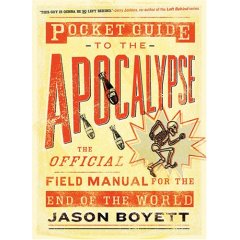
For some fun reading, try this little paperback I received as a Christmas gift: The Pocket Guide to the Apocalypse by Jason Boyett. Funny, and yet, informative in a strange sort of way. Includes a chapter of candidates for Antichrist. Also a timeline of wrong predictions for the end times. Boyett does a good job of poking fun without going TOO far. One reviewer on Amazon called it a "Dave Barry's Travel guide to the End Times". Sounds good to me!

Sunday, December 25, 2005

Sermon - Christmas Day - Luke 2:1-20

The Nativity of Our Lord – Christmas Day 2005
Luke 2:1-20
“Christmas’ed Out”

I. Introduction –

A blessed Christmas day to you. As we celebrate the second highest holiday of the Christian calendar, I pray that your day, that this season, is filled with all the joy, and love, and happiness, and warmth and hope and peace… well, maybe that’s not so realistic.

For many people, and perhaps for you too, by this time we are “Christmas’ed out”. Like a vacation that looks great in the brochure, but once you get there you can’t wait to come home. For many of us this time of year, the stress, the hassle, the shopping, cooking, hurrying, the visiting, and all the other stuff we HAVE to do… might not seem worth it. For most, there’s at least a part of us that is glad Christmas is here, so we can get on with other things.

II. Bah Humbug
Perhaps Mary and Joseph had the first case of “Bah Humbug” Christmas stress. You can imagine the difficulty of the journey – and Mary “great with child”. Some very pregnant women have difficulty even walking, much less traveling over 70 miles of rocky countryside and dusty roads.We can imagine what the people were saying about her and her mysterious pregnancy. Under such a cloud of suspicion, maybe she was more than happy to “get away” for a while.
Perhaps Joseph felt the burden that rested on his shoulders, and wasn’t in the “Christmas spirit”, knowing that he would have to care for a child – and not on his time-table. What an inconvenient time for this census, too, by the way!

Perhaps you too have a little “bath humbug” going on. We build Christmas up to be such a spectacular event, it’s easy to get disappointed, to become jaded. Whatever your struggles with life this Christmas, you will not find ultimate answers in the wrapping paper and the lights, the egg nog and the figgy pudding. Visiting with family is nice, seeing the wonderment of a child brings some warm fuzzies. But there is only one true answer to the bah-humbug. There is only one who can keep us from being “Christmas’ed out”. He is the Christ the Lord.

III. Mary’s Treasures
It’s often noticed how scripture doesn’t often tell you what someone was feeling. It doesn’t usually tell you what someone thinks. But here we have a little bit of a window into Mary’s heart and mind. “She treasured up these things and pondered them in her heart”. Even this doesn’t tell us that Mary was full of pleasant emotions, or sappy sentimentalism. But it does tell us that her heart and mind – presumably for decades – dwelled on the treasures of this Christmas story.

We have a children’s book about a family of bears who go on a vacation. It’s supposed to be this wonderful getaway at a cabin in the woods. It turns out they encounter a skunk, the cabin is dirty, the food is bad, and it rains the whole time. But all the while they take pictures. And at the end of the book, it tell s how they take out the pictures every so often and enjoy their memories of “worst vacation they ever had”.

The treasures of the Christmas story are much like that. The stress of an unusual pregnancy. A long, tough journey. A no vacancy sign at the inn. A humble crib – a feeding trough. Strangers - smelly shepherds barging in to see the baby. In many ways, it couldn’t have been a worse vacation. And yet for Mary, and for us, these are treasures to ponder.

And the greatest treasure of them all, of course, is the child himself. He who makes everything else matter so little. He turns the bad into good. He brings light to darkness, life to death, and God’s favor to sinners. He, the very Son of God, stooped down to take on human flesh, to live, to die, to rise, and to save. Mary treasured this greatest treasure. So do we.

She would “ponder all these things” as Jesus carried out his work for our salvation. As the baby Jesus was blessed by Simeon at the temple. As the boy Jesus stayed behind in the temple. As the man Jesus changed water into wine. As he preached and taught, cast out demons, healed the sick, commanded nature, and raised the dead to life.

And Mary would ponder the treasures also at the foot of a Roman cross, as her Son – once a precious baby – would now suffer the wrath of God for the sins of the world. Then Mary saw the true measure of the treasure she and all the world received on that “silent night” years ago. A God who takes flesh to die for his people.

When all the so-called treasures that obscure the true treasure are stripped away, and we are left with a manger that leads only to the cross, then we, like Mary, can ponder in our hearts the true treasure that is Christ. And Christmas becomes, once again, about Christ. And how can we “bah humbug” such a treasure?

IV. Glorifying God
There were at least some who were not “Christmas’ed out” on that first Christmas. Take the angels. They appeared in multitude to sing a song the shepherds would hear, but a song that was directed to God, “Glory to God in the highest, and peace to his people on Earth.” We sing that song to this day in the church.

And the shepherds, they saw the Treasure, and spend little time pondering, but like the angels, went to tell! They too “glorified God”. Not telling so much about the angels, but “everything they had been told concerning this child”. Singing and telling, glorifying God, both angels and shepherds treasured this Babe of Bethlehem.

For them, it wasn’t about being “Christmas’ed out”, but getting the message of Christmas out! That this day, a Savior has been born, that he is Christ the Lord. He brings God’s peace and favor to Earth. The shepherds, especially, took a fresh look in the manger. “Let’s go and see” they said. And so have we, come this day, in a sense, to Bethlehem. To see this thing that has happened, this thing we call Christmas. For the shepherds, there was no rampant commercialism or competing cultural custom to obscure the view of the Treasure. They saw him clearly – the long awaited savior - and they glorified God. Let it be so for us as well. As we hear the Savior’s words, we ponder the Treasure. As we receive his Body and Blood, he brings peace on Earth – heavenly peace – to each forgiven sinner.

Whether you are “Christmas’ed out”, and feeling a little “scroogey”, or whether this truly is your favorite day of the year, and even if it’s a little bit of both – join the shepherds, and Mary, and the angels – in the pondering and the singing and the glorifying – and take a look at the Treasure in the manger, who is Christ the Lord - and have a blessed Christmas. Amen.

V. Conclusion
Perhaps by now, you are “Christmas’ed out”. But take a fresh look in the manger, and see what a Treasure is the babe of Bethlehem. Glory to God in the highest!

Friday, December 23, 2005

Oplatky

I married a third-generation Slovak, and have learned a number of Slovak words and traditions over the years. It's pretty interesting for someone like me, who has no strong ethnic heritage (being an American "mutt").

My wife sent me on a mission yesterday to acquire a traditional Slovak Christmas food, "Oplatky". I called over to our local SELC church (also Missouri Synod Lutheran, but with a Slovak heritage). They make a certain amount of the stuff each year, and sure enough they had just one order left!

Check it out - I think it's a nice tradition. In my wife's family, they eat the oplatky drizzled with honey. I understand Pentecost also uses the oplatky as communion wafer throughout the year.

More ELCA Symptoms


In the apparently terminal illness of the ELCA, another symptom has appeared. Living up to her name, Bishop Payne, of the New England Synod of the ELCA, gives her blessing to same-sex blessings. (Let it be noted that this is the same Bp. Payne who chaired the "sexuality studies task force" - read, "homosexuality task force") In an post from the ALPB site:

At the New England Synod Bishop's Convocation held in Nashua, N.H. on November 7-9, 2005, Bishop Margaret Payne in her bishop's address announced to those in attendance that she interprets Resolution 2 of the three resolutions regarding sexuality adopted in Orlando at the ELCA 2005 Church-wide Assembly to allow for the blessings of unions of same gender couples in committed relationships. These may take place in the churches [that is, the church buildings] provided that pastors, couples, congregations, etc. understand that there is not an official rite of the Church for such blessings. The bishop requested, however, that pastors who intend to perform such blessings should first:

1. inform Bishop Payne
2. discuss the matter with congregation councils
3. not allow same-gender union blessings to become media events.

Bishop Payne said that at present she did not feel called to "ecclesiastical disobedience," but she believes that Resolution 3 deprives the New England Synod and the ELCA of good and faithful pastors who are otherwise qualified to serve the Church. She also stated that she sees no convincing theological arguments for excluding gay and lesbian persons in life-long committed relationships from serving as pastors.

Furthermore, Bishop Payne said that she would respect those pastors, who for reasons of conscience, could not accept or perform same-gender union blessings. Although Bishop Payne felt she needed to resign from the ELCA Sexuality Task Force, she believes her role on the Task Force was a call from God. She stated that she intends to spend more time among the people and congregations of the New England Synod, and that she will stand for re-election as bishop, "but that's up to the Holy Spirit," she said.

--The Rev. Jack R. Whritenour, Trinity Lutheran Church, Shelton, CT

Thursday, December 22, 2005

Suing FOR Christmas


For the last two days, our local paper has run front page stories on Mr. Robert Wortock.

He is about to sue the city.

He is threatening legal action if the city of Racine doesn't put up a nativity scene and signs that say, "Merry Christmas".

You can read the articles here and here.

Here is his opinion piece which appeared on the editorial page (the first one, "Afraid to speak up")

And here is a weblog entry on the topic, by one of our local reporters (Dustin Block - a Buddhist, by the way). There are many comments...

In the "War on Christmas", is the best defense a strong offense?

Tuesday, December 20, 2005

"7th Heaven" meets "Desperate Housewives"


That's what the upcoming NBC show "The Book of Daniel" sounds like.

I received a comminque' from one "American Family Association", which keeps up on things like this. AFA seems very concerned that the main writer for the show is homosexual. While that doesn't make a show worth watching or not, the show's premise is a little disturbing:

(from AFA):

The main character is Daniel Webster, a drug-addicted Episcopal priest whose wife depends heavily on her mid-day martinis.
Webster regularly sees and talks with a very unconventional white-robed, bearded Jesus.
The Webster family is rounded out by a 23-year-old homosexual Republican son, a 16-year-old daughter who is a drug dealer, and a 16-year-old adopted son who is having sex with the bishop's daughter.
At the office, his lesbian secretary is sleeping with his sister-in-law.

I have to confess, when I saw the previews on TV, with Jesus telling the priest to "read his book", it sounded maybe even a little funny. But I should have known that anytime network TV does "Christianity", bad things happen.

And, do we really need more homosexual characters on TV? Can they do at least ONE show without any?

Monday, December 19, 2005

Lutheran Carnival 13

Lutheran Carnival 13 is up at Aardvark Alley

While there, I also stole a couple of those nifty little blog badges. Thanks, Aardie!

Sermon - Advent 4 - 2 Samuel 7:[1-7] 8-11,16


4th Sunday of Advent – December 18th 2005
2 Samuel 7:[1-7] 8-11,16
“David’s House”


I. Introduction – So with Christmas one week away, are you done with all your shopping? I have found in the past that some people are easier to shop for, and I get those done early. But then there are the more difficult cases. And the question that plagues many a Christmas gift-giver. “What do you get for the person who has everything?”

In today’s Old Testament reading, King David tries to answer that question. Not for a Christmas gift, but he wanted to give something to God, or do something nice for God. What do you get for the person who has REALLY has everything?

God had made David a king, had given him victory over all his enemies, and made him prosperous. David had enjoyed that prosperity, and after making Jerusalem his capital city had a fine palace built for himself. But he got to thinking – the ark of God, the dwelling place of the Lord – was still in a tabernacle, a tent. A temporary dwelling (sort of the ancient version of a mobile home). But David in a fine palace. This wasn’t right God deserved better. So David got his idea. I will make God a nice, big, permanent temple! God deserves it! And I can make it happen.

II. What Have You Done For Me Lately?
Like David, many of us think first of ourselves, and give to God as an afterthought. It’s a milder form of selfishness. Still, we might give credit to David for at least THINKING of the Lord. What he wanted to do was an honorable thing. It was nice. Surely David at least meant well.

But God had other plans. In fact, God (through the prophet Nathan) squelched the idea, shot it down. “David, when did I ever – in the last 200 years – asked ANY of my people to do something like this?”

We are not unlike David. We humans try to come up with our own ways to please God. And in doing so, we fail to please God. We think we know better than God does what he wants. We fail to listen closely enough to what he actually says, what he really asks for and demands.

How many people, even some Christians, think the message of the Bible is “be good – pretty good anyway – and get to heaven!” I heard a radio spot by a Roman Catholic priest just this week, which claimed Christianity teaches self-sacrifice is the way we get to heaven. This is simply wrong.

Christians know that we can do nothing for God that is good enough to please him. Nothing on our own, that is. “No merit or worthiness in me” our catechisms says. No bright idea. No exertion of effort. No persistence of prayer or worship or involvement in charity, no amount of financial sacrifice can put a smile on his face.

As the prophet Micah asks the rhetorical question, “with what shall I come before the Lord, and bow myself before God on high? Shall I come before him with burnt offerings, shall I come before him with yearling calf, will the Lord be pleased with thousands of rams? With ten thousand rivers of oil? Shall I give him my first-born for my transgression, the fruit of my body for the sin of my soul?” And rhetorical answer, of course, is no.

We know, like David, that we owe God something. We know that our sin is great, and something must be done. But we also know that God is the one to do something about it, in the person of his son, Jesus Christ!

III. God Builds a House for David
As usual, God has a better idea. His plan, as he tells Nathan and Nathan relates to David, is that “The Lord himself will establish a house for you!”
And in a twist on the word “house”, God makes a promise to David that comes true in Christ. Here’s how it goes.

“Your house” (that is your dynasty) “will endure forever before me; your throne will be established forever”. David’s royal line is what God means. That a son of David’s (from David’s house) would rule on David’s throne forever.

You don’t have to be a professor of history to know that David’s throne, or his royal lineage, didn’t last forever. Like every other empire that rises and falls, so too did ancient Israel fall to the Babylonians. And never again, and certainly not to this day, did a king with David’s blood in his veins rule the promised land. But God is not a liar, and so we must understand this promise differently.

And I suspect you know the Son of David to which it truly applies. The one descendant of David in whom this promise is fully fulfilled. It is none other than the Son of God, and the Son of Mary (who was of David’s lineage). David’s house IS established forever in Jesus Christ. David’s throne is occupied forever in Jesus Christ. Jesus, whose royal birth was foretold by the angel to the virgin, that “The Lord God will give him the throne of his father David, and he will reign over the house of Jacob forever; his kingdom will never end.”

The same Jesus reminded Pilate, and he reminds us, that his “kingdom is not of this world”. He is not like earthly kings with all their wealth and pomp and majesty. He does not enter with a fanfare, but in the still of a Judean night. He is not dressed in royal finery, but wrapped in swaddling clothes. He grows not to lead armies in battle and make his name great, expanding the territory of his people and exacting vengeance on their enemies. He grows to preach, and heal, and serve, and especially to die. Not in glorious battle, but in humble shame, for the sins of his people. And so the cursed cross becomes his throne, the charge of criminal his title, and a borrowed tomb his royal burial chamber. Not much of a king by the world’s standards.

But what earthly king ever rose from the dead? What earthly king ascended to heaven’s throne, and God’s right hand? What earthly king gave his subjects the highest authority in the universe – the power to forgive sins in his name? No earthly king. But our king did, and does.

The Son of David, Jesus Christ, is our king, too. We are the new Israel over whom he rules. Our hearts and lives and spirits are subject to him alone, for he alone has saved us. We belong to him. By his royal blood, we are brought under the protection of God’s house. In his resurrection, we have the royal inheritance of life eternal. We couldn’t do anything for him. But he has done so much, and does so much for us. This is God’s plan. This is the promise to David, now fulfilled.

IV. What, Then, to Do?
So far we have seen that the best laid plans of men to please God are just not good enough. Much better to listen to God’s plans, and to trust him to bring them about. But having received so much, do we then sit idly? Should we then, do nothing at all?

No. For God’s plan is also that his people, forgiven and blessed by Christ the Son of David, would enact the love of Christ in their lives. That you and I, by the power of his Spirit working in us, would grow not only in faith but also in good works. Oh the works don’t build the house, they don’t even add anything to it. But they are expressions of the royal bloodline that we too are now a part of. For in Christ, we are a “holy nation, a royal priesthood”.

THIS is God’s plan. Not that we do things for him. But that he does for us first, in Christ, and then our works of faith follow… As Ephesians 2:8-10 puts it, “For it is by grace you have been saved, through faith—and this not from yourselves, it is the gift of God— not by works, so that no one can boast. For we are God's workmanship, created in Christ Jesus to do good works, which God prepared in advance for us to do.”

David didn’t build the house for God, God built it for David, in Christ. So too in Christ, we are God’s workmanship – re-created in the waters of baptism and by His word and Spirit calling us to faith. Re-created to be holy and blameless in Christ, and to do the good works He intends.

May we, who now share now in that royal bloodline, respond to God’s plan as did the virgin Mary, “I am the Lord’s servant; may it be to me as you have said”. And may our faith in the God who alone builds the house, be followed by works of service and love, for the sake of Jesus Christ – our great king. In His Name, Amen.

V. Conclusion
David wanted to “do something for God”, but instead God does something for him (and us!). God fulfills his promises in Jesus, our eternal king. If we do anything for God, it’s because he has already done for us.

Thursday, December 15, 2005

" 'Holiday' didn't die for you "

Fun original quote from one of my members as we discsussed the war on Christmas in this Sunday's Bible Class. Thanks, Gloria!

Sheltering Children

Dr. Veith on the Cranach blog has some good observations about sheltering children from "negative emotions" one might find in a movie like the recent Narnia film.

In my comments to his post, I said:

This reminds me of the shift I have seen in the bedtime prayer, "Now I lay me down to sleep..."


Instead of "If I shall die before I wake, I pray thee Lord my soul to take" we now hear, "May angels watch me through the night until I wake in morning light". I refuse to use the newer version with my daughter, and teach her the one I learned as a child.

I also have a little statuette my father-in-law gave me, in which a boy is kneeling to pray, and it reads, " 'Now I lay me down to sleep,' a little boy once said, 'If I should die before I wake, how will I know I'm dead?"

Children need to know about death. They also need to know about the one who rescues us from death. How do you teach children about the cross without teaching them about death?

Tuesday, December 13, 2005

Stumbling on Stiegemeyer


Well,

As I mentioned, my wife is the more "anti-santa" in our home, and when she went to the local Christian book store came home with a book about the "real Saint Nicholas". She had been looking for something on the real story of Santa.

As I sat down to read it with my four year old, what to my wondering eyes should appear, but the author's unmistakable last name of "Stiegemeyer". Small LCMS World, eh?

Anyway, nice book, Julie! And to everyone else, I recommend it:

Saint Nicholas: The Real Story of the Christmas Legend

If you buy it online, you can do so through Rev. Stiegemeyer's blog, Burr in the Burgh, and I think they get an extra 20 cents or something.

Monday, December 12, 2005

The Bloggers are Coming!

Just announced, the 1st annual

"Confessional Lutheran Bloggers Conference"

When: January 16, 2006 7:30 to 9PM (The day before Symposia)
Where: Concordia Theological Seminary, Ft Wayne, IN
Who: Lutheran Bloggers and Friends.

Speakers will include Rev. Snyder of Ask the Pastor, and possibly Dr. Veith of Cranach. The topic will be the effect that Lutheran Bloggers are having on the church body.

To receive more info and updates, go to the Lutheran Blog Directory and sign up in the google group box near the top.

Sunday, December 11, 2005

Sermon - Isaiah 61:1-3,10-11 - Advent 3


3rd Sunday in Advent – December 11th, 2005
Isaiah 61:1-3,10-11
“Good News”

I. Introduction –
How many different ways can you say the same thing? How many ways to say “I love you”? How many ways to say “yes” or “no” or “thanks”?
How many different ways can we express the content of our faith? Jesus loves me this I know. Jesus died for us on the cross. He forgives my sins. He saves me, reconciles me to God, renews my life, makes me his child, promises an inheritance, makes us holy, righteous, blameless. He redeems us, he defeats the devil, he rescues us, restores us…. Well, I could go on.

While sometimes it’s a challenge for the preacher to express the truth of the Gospel in a fresh way, in reality, there are so many ways it can be said. Just ask Isaiah. Today’s reading, a messianic prophecy, bubbles over with a multitude of expressions – all telling the same good news that Christ brings.

II. …Good News to the Poor…
A young child was working feverishly to draw a picture. Breaking his hard concentration, his mother asked him,. “what are you drawing?”

“I’m drawing a picture of God,” he said.

To which his mother inquired, “But nobody knows what God looks like…”

This didn’t stop the boy, who simply said, “They will when I am done!”

Isaiah, in a sense, is painting a picture for us today of what it will look like when the Messiah comes. He was looking forward to that day. And we look both back on the Christ who came and forward to the Christ who is to come. Either way, when Christ comes, things look different.

Jesus turns everything upside down in this listing of opposites – “not this, but that”

In our sin, we are all these things and more: poor, brokenhearted, captives, prisoners, mourners, filthy with ashes, filled with despair.

But in our savior we are: rich, healed, free, comforted, clean, beautiful, and full of praise to our great God.


The good news he brings is ALWAYS the answer to the problem we are having. Are you poor? Christ makes you rich. Are you soiled? He makes you clean. Are you mourning? He brings you comfort. Are you captive? He makes you free.

Perhaps you’ve seen the series of commercials, in which someone has a problem, and another says, “but I have good news!” “well what is it?” “I just saved a bunch of money on my car insurance…”

Jesus has good news, and it has nothing to do with insurance. It is a good news which actually applies to us and our problems. It is a good news that is real and meaningful and powerful. He comes to turn our sinful world upside down.

John the Baptist had a part in painting the picture too. John’s news was that someone was coming with greater news. But (in Luke 7) even John had his moments of doubt. Thrown in prison for speaking up against Herod, John sent some disciples to ask if Jesus really was the one after all. And better than giving a simple yes or no, Jesus says,

“Go back and report to John what you have seen and heard: The blind receive sight, the lame walk, those who have leprosy are cured, the deaf hear, the dead are raised, and the good news is preached to the poor.”

Jesus reverses all these conditions: Blindness, Deafeness, Lameness, Leprosy and even Death. But the real kicker, the most important part is the last – that the good news is preached to the poor. It’s as if Jesus is pointing John (and us) back to Isaiah 61 – to show that, yes, he fulfills the promise, he delivers the goods, he brings the good news.

But there’s two more pictures of what life is like when Christ comes, two more ways of describing this good news:

III. Dressed for the Occasion
With Christmas approaching, perhaps you have a special outfit in mind.
We often dress up for special occasions. And perhaps no life event is more formal than a wedding.

Isaiah picks up on that image – that when the Lord comes, it will be like a wedding. A day which is long awaited. A day which is a great celebration. A day which is a highpoint of the year – even, of your life. So dress appropriately!


But what if you have nothing to wear? That’s how we all are. We look in the closet of our heart and find that the moths of sin have destroyed the garments. We have nothing of our own to wear, except, as Isaiah puts it, “a spirit of despair”.

We are like Adam and Eve, shamefully hiding our sins from the Lord. The best they could do was sew together some fig leaves – makeshift coverings at best. When God comes to the garden, He is well aware of their sin. But rather than shame them further, he provides for them. In his mercy, he makes them clothing from the skin of animals.

As Adam and Eve are dressed by the Lord, we too must be dressed by him. But for us, there isn’t a dead animal and a fur coat. Instead God sacrifices his son, and we are clothed with Christ. As Revelation 7 says it, those in heaven have “washed their robes in the blood of the lamb”. Or, as Isaiah here says, “he has clothed me with garments of salvation, and arrayed me in a robe of righteousness”. That’s what things look like when the Messiah comes. That’s how God dresses us in Christ. That’s the good news!

And one final image:

IV. The Garden of Righteousness
Now to the agricultural. Twice Isaiah refers to this planting. And here too there is a great change afoot, and good news to hear.

From the tiny acorn to the might oak tree – one of nature’s great contrasts.
Like the faith the size of a mustard seed, which grows to a large bush.
When God begins, he seems to start out small. But before you know it, big things happen.

Our faith is like that too. It begins with a few words, and a little water. And this small thing we call baptism has the power to save a soul for eternity! God starts small, and ends big!

Not too unlike the humble babe in a manger, who as a man dies in shame on a Roman cross, and by doing so pays for the sins of the world. God takes the small, the humble, the lowly, and he works wonders.

And of course, as always, God does the doing. Just as he sends the messenger with the good news, just as he takes the spirit of despair and clothes us with a garment of praise, so too the righteousness he brings to us and for us, he plants it, he waters it, he makes it grow. We simply receive the blessings.

Today, we hear the good news. Whether it’s about new clothes or an impressive garden, or a little baby in a manger - it’s the same good news we always hear, told in slightly different ways. Christ always brings good news to the poor.

V. Conclusion
Isaiah’s poetic prophecy makes it clear - the good news of Jesus brings rejoicing where there was despair. Let us ever delight in the Lord!

Thursday, December 08, 2005

"Oh, Tuesday Night"

I don't usually stay up late enough on Saturday to watch "Saturday Night Live", but for some reason this week I caught the opening skit, and it was a fun piece of satire. I share Doug Howe's post about it from Beliefnet.com


"Saturday Night Live" at its finest is satire, not just comedy. At its satirical and relevant best, it offered some neutered and politically unoffensive versions of "holiday" carols on this week's show. In so doing, one of the most traditionally irreligious shows on television succeeded in displaying the limited value of a neutered holiday. Among the lyrics:

"Silent Night, Regular Night..."

"Away in barn box..."

"The stars in the sky shine down cuz its night, the lamb and a donkey just got in a fight..."

"Oh Tuesday Night, the starts are brightly shining / It is the night to watch tv and play cards... Fall on your knees, and do a jigsaw puzzle /Just stay inside, tonight
(big finish here!) Just stay-ay-ay-ay, Insi -ih-ih-ih-ide, Inside tonight. "

The Christmas reading, the Story of the Holiday's Birth, was then delivered by Pastor Donald Trump: "The shepherds were watching their flocks by night when a community civic leader came to inform them that a woman of unknown ethnicity was having a baby in the barn box."

The event then culminated with the Handel's revised "How Ya Doin’" chorus: "Howyadoin’ howyadoin; howarya-doin’."

I was laughing but wasn't doing fine, and made a decision to read the Christmas story as often as possible with my kids this season. I suggest you do the same if Christmas is important in your spiritual journey. Otherwise, "Hark the Sale, Commercials Sing" may be as holiday-ish as it gets for them... and their kids.

Wednesday, December 07, 2005

What to Do with Santa?


Conservative Jewish moral philosopher (and radio talk show host) Dennis Prager has an interesting article, "In Defense of Santa Claus"

In our house, my wife is the big anti-santa. Her objection seems two-fold. One is the honesty factor. Two is the emphasis (Santa vs. Christ). I'm with Prager more on the honesty factor (we let her watch Barney without the caveat that it's a guy in a purple dinosaur suit). I'm with my wife on the emphasis factor.

Cute story though: Our four year old heard "Here Comes Santa Claus" on the radio, and spontaneously started singing "Here Comes Jesus" instead.

Cute story two: She said to her mom, "I wish Santa was real. I'm going to talk to God and ask him to make Santa real". Kids. Gotta love 'em!

You can read more Lutheran reflections on Santa Claus at these blogs:

Burr in the Burgh

Cyberstones

Incarnatus Est

Monday, December 05, 2005

Bachelor's in Fatherhood?

Today, my older daughter turns 4 years old.

As most parents, I am amazed at how quickly the years have gone by.

I also wonder whether I learned more in my four years of college, four years of seminary, or four years of parenthood. It could be a close call.

Anway, reflections and insights from these 4 years:

- Children can push you to the limits of human emotion, both good and bad, and cause you to react in ways you never thought such a small creature could.

- The stupidest words I ever said (out loud), "Having kids won't change our lives THAT much".

- Having "up close and personal" experience with a child brings new levels of meaning to scriptural ideas and teachings - that God is "our Father", that Jesus commends the faith of Children, even the idea of laying down one's life for another.

- There was some Luther quote I read about Fathers changing diapers because it was a Christ-like thing. I wish I had a quarter for every dirty diaper I changed. But if I had a nickel for every sin of mine God forgave... (then I REALLY wouldn't need Google Adsense)

- Two words: ORIGINAL SIN. Kids give you a lesson it it you will never forget.

- How anyone does this on their own amazes me (single parents). How mothers do what they do amazes me. Single dads get the gold star in my book.

- I am SO not built to be a mom. My wife and I certainly offer different kinds of love to our children. Motherly, and Fatherly, respectively. But I could never do what she does.

And much, much more, of course.

Thank God for the gift of children, and for the many ways He blesses our lives through them.

Three Camps in the LCMS

Just read a fascinating paper by Dr. Adams of Concordia Seminary, St. Louis.

In it, he outlines a theory that the LCMS today is divided in 3 distinct factions:

Traditional Missouri

Moderate Missouri

Neo-Evangelical Missouri

It's a great read - and to me, it rings true!

Sunday, December 04, 2005

Sermon - 2nd Sunday of Advent - Mark 1:1-8


2nd Sunday of Advent – December 4th, 2005
Mark 1:1-8
“The Voice of John”

I. Introduction –
Last week I mentioned how the Church celebrates this time before Christmas differently than our secular culture. The culture “jumps the gun” on Christmas in a way, while the church, in the season of Advent, continues wait, anticipate, look forward to the coming Christ.

Likewise, very different visitors appear at this time in the church, and the world. In the “world”, you have the ever-present character of Santa Claus. A jolly old man, obviously well-fed, who wears a tell-tale kind of clothing and knows whether you’ve been naughty or nice.

In the church, a different man appears in Advent, John the Baptist. Would we call him jolly? Probably not. Well fed? If you like eating locusts and wild honey. He does wear a tell-tale kind of clothing – camel hair and a leather belt. And John’s call for repentance shows that he knows – you’ve been naughty, not nice.

So today, the sermon isn’t about Santa Claus, but John the Baptist. But the sermon is also not about John the Baptist. It’s about the One John prepared for. It’s about the One greater than John. Like John’s preaching itself, today’s sermon isn’t about John, it’s about Jesus. Listen to John’s voice, and hear about Jesus.

II. John’s Voice - Breaking the Silence
The voice of prophecy had been silent in Israel for some 400 years. Not since the prophet Malachi, and the last book in the Old Testament, had a prophet spoken. So when John bursts on the scene, and speaks his prophetic sermon, he breaks a long silence.

John also hearkens back to that final prophetic word, by himself fulfilling a prophecy from Malachi’s last chapter, that the prophet Elijah would be sent to prepare the way for the Lord. Remember, God keeps his promises.

John was not Elijah reincarnated, or something silly like that. But he was “in the spirit” of Elijah, and of all the prophets – predicting the fulfillment of God’s long-awaited messianic promise. John wore the clothing of a prophet – dressed very similar to Elijah himself. His garb and his lifestyle were humble – also a witness against decadence and materialism. He resided in the desert – and evoked that prophecy of Isaiah 40 “In the desert prepare the way for the Lord.”

John’s prophetic voice and rather odd actions may stick out in our minds as weird. But there was purpose behind it all. All these things pointed to something deeper about John the Baptist, something which is still worthy of our attention…

III. John’s Message – Repent, He is Near!
Most of us think about John as a Baptizer. Perhaps you even picture him waist-high in the Jordan River. In fact some scholars estimate that John baptized 200,000 to 500,000 people.

But what really caused such a stir was not that John baptized. Baptisms were quite common back then. Ritual washings of all sorts had been around since the dawn of human history in all manner of religious systems. Even in the Judaism of John’s day, Gentile converts were baptized to bring them under the covenant. So why all the fuss about John then?

It wasn’t his baptism, per se. What then caused the sensation that was John the Baptist? Even Jesus (humorously) asks the same question in Luke 7: “What did you go out in to the desert to see? A reed swayed by the wind? A man dressed in fine clothes? No, those who wear expensive clothes and indulge themselves in luxury are in palaces. But what did you go out to see? A prophet? Yes, I tell you, and more than a prophet.”

John was a prophet. And a prophet is a messenger. And it was the message of John that drew all the attention. It was his sermon, his preaching, that made the bigger splash than the baptism alone.

John’s message, perhaps summed up best in one word: “Repent!”. It means there is sin that needs to be dealt with. But it also suggests there is a way of dealing with it. Repentance is more than just being sorry, you see: It means contrition (sorrow) for sin, faith in the one who forgives it, and a turning or changing of heart and mind – so that good works always follow. John’s preaching of repentance was not just a harsh slap in the face, it was also an anticipation – a preparation – for the fulfillment of God’s greatest promise.

In fact, his baptism went right alone with his message: “a baptism of repentance for the forgiveness of sins”. And it was a baptism which pointed forward to one who would bring a greater baptism. One who would win the forgiveness that John was offering. In a very real sense, John was preaching about Jesus, his savior – and ours.

IV. John’s Savior – “One Greater Than I”
John’s sermon culminated with an Advent theme: “Someone is coming, who is greater (more powerful) than I” We know he meant Jesus.

But Jesus said in Luke 7, “among those born of women, there is no one greater than John, yet the one who is least in the kingdom of God is greater than he.” Is Jesus contradicting John? Who is it that is really greater? Jesus, or John?We might say that Jesus is greater, and we would be right. John rightly honors his Lord and Savior, saying that he is not worthy to untie his sandal. Only a slave, and a non-Jewish slave, was expected to take off the master’s shoes and wash his dirty feet. John is saying he’s not even worthy to be Jesus’ slave. And he is right. None of us are, in our sin, worthy to come anywhere NEAR the Holy One of God. Jesus is surely greater – he is without sin – he is God of Gods, Light of Light. Jesus is surely greater.

But what Jesus says is true too. The one who is least in the kingdom is greater than even the great prophet John. The one who is least in the kingdom is the one who is the servant, the slave, of all. And who is least in the kingdom? It has to be Jesus. He who makes himself the servant, the slave of all. He who knelt to undo the thong of his disciples’ sandals, and wash their feet. He who knelt in prayer in the garden in submission to His Father’s will. He who submitted to arrest, and torture, and death on a cross – to serve all mankind with his great love. He became the least in the kingdom – despised, rejected, stricken, smitten, afflicted, shamed, ridiculed, and forsaken. He became sin to make us holy. He became the sacrificial lamb of God to make us the children of God. He became least, to make us great.

Today the prophetic voice of John can still be heard, when the Christian preacher points people to Jesus. When repentance is called for, and forgiveness is offered. It’s always based on one greater than ourselves, one who we are not worthy to serve but who served us so greatly. We preach forgiveness and baptize in his name, according to his command. We also proclaim his presence in the sacramental meal, that mysterious presence of Christ among his people. And we too remind the faithful that just as Christ once came, and though he has gone, yet his two-fold promise still stands. “I will be with you always” and “I go to prepare a place for you, and I will come back to take you to be with me”.

American culture sees Santa as the sign that Christmas is coming. But the Church sees John as the sign that Jesus is coming. I think John still gives many Christians pause. We think about his odd appearance and habits, we mull the meaning of his baptism, and we wonder just how it all fits together. But let us also, in this Advent season, ponder the message, the sermon of John. “Repent! For someone great is coming” And let us put our faith and trust and hope in that one, Jesus Christ, our servant and our Lord. Repent, and be forgiven, for he is near.

V. Conclusion
Today we hear from our annual Advent personality, John the Baptist. And in John’s preaching, we too are prepared for Christ’s coming – and the salvation he brings.

Friday, December 02, 2005


The latest edition of "The Lark" is up. Check it out.

Thursday, December 01, 2005

Check Out the New Format!

Advent - New Year - Out with the old, in with the new.

Over the weekend I hope to have the site rebuilt. Burr in the Burgh turned me on to the 3-column thing. As always, the best ideas are the ones I steal from others!