Monday, July 31, 2006

Sermon - Pentecost 8b - Amos 7:10-15


Pentecost 8 – (July 30th 2006)
Amos 7:10-15
“Don’t Kill the Messenger!”


“Don’t kill the messenger!” Look, you may not like what I am telling you, but I am just relaying the message. I didn’t cause the problem. I’m just telling you how it is. It wasn’t up to me, I’m just passing the info along. You may not like it, but “Don’t kill the messenger”.

No matter what that unwanted message is, I think we can all relate to the feeling. Both of being the bearer of unwelcome news, and of not appreciating the one who brings US the bad news. Is it a doctor telling you the diagnosis? Is it a friend filling you in on one of your own flaws? Maybe a family member trying to mediate a conflict. Don’t kill the messenger! They are only trying to help!

I suppose that’s sort of how Amos felt when his message was not so well received. I don’t think he was surprised. After all, when you start predicting the death of the king and the destruction of your nation – that’s not the kind of message that people want to hear, especially the king. And so they tried to silence Amos. The tried to make him leave. But Amos would not stand down, soften his tone, or use a better choice of words. His message was not his own, you see, he spoke for the Lord.

When we think of a prophet, we usually think about someone who tells the future, and Amos did do that. But strictly speaking, a prophet is one who speaks for the Lord. He is a representative. A messenger. Often this message involves predicting the future, but it is just as often about a word of God for the present. “God is displeased with you NOW. He wants you to repent NOW”. Amos followed in this long line of prophets who spoke a message from the Lord himself. So really, it wasn’t Amos that the king and his servants wanted to silence, it was the Lord. After all, Amos wasn’t even a prophet by heritage. He was a farmer and a shepherd. He had no special expertise, no great wisdom. He spoke – but he spoke only for God, as God instructed him.

Now sometimes, the Lord has a kind word for his people. A word of hope, a word of promise. But sometimes, the message is one of disapproval, condemnation, judgment. And we humans need to hear both. The bad news is that we are sinners, and that each of us has turned from God and deserves his punishment. But the good news is that our God is a merciful God, who does something about our sins through Jesus Christ. This word of God – both law and Gospel – is the message of the prophet.

The people of Israel in the time of Amos needed the hard word of the law. They needed to repent, to be shown their sin, to hear God’s disapproval. And had they listened, Amos would just as surely have spoken God’s word of peace and forgiveness to them. Sadly, too often, the hard words of the prophets like Amos fell on deaf ears and hard hearts. They killed many a messenger, thus rejecting the message, and the one who sent it. And so it went with those Old Testament prophets.

But biblical prophecy finds its fulfillment in the person of Jesus Christ. Not only because he was the one the prophets predicted would come, but because he himself is the greatest prophet ever. Remember, a prophet speaks for God. Certainly Jesus with all his great teaching and preaching did just that. He spoke on behalf of his Father. He gave to his disciples as the Father gave to him. But Jesus is more than just a messenger.

He is the very message. He is the very Word of God made flesh – who was with God in the beginning, the Word by which all things were made. The word who became flesh and dwelled among us. The word they tried to silence by putting to death on a cross. But the word which could not be held in death and spoke again, alive, in Easter glory. Jesus brings the message, but Jesus IS the message.

That is, the content of our faith is Jesus Christ: who he is, and what he does. That he is true God and true man, who takes our place before God – to live a perfect life – to shed his blood and die in our place. Talk about “Don’t kill the messenger!” But that was his mission! To face death, to endure it, to defeat it, and bring us life. By believing in him and his message – we live, even though we die.

Now, like all prophets, sometimes Jesus had a harsh word to say. He did not shy away from calling out sinners. Though we think of the Pharisees as bearing the brunt of Jesus’ criticism, our Lord also addressed the sins of others. He would not let the Samaritan woman at the well off the hook for her many husbands. Even his own disciples – He criticized their lack of faith, He even called Peter “Satan”. And most of what we know about Hell comes from Jesus’ own teaching. Jesus actually raised the bar on many of God’s commandments, showing how even sins of thought make us unworthy to God.

But Jesus word of forgiveness was the point of his message. “Neither do I condemn you”. “Father forgive them”. “Son, your sins are forgiven”. Jesus who won the forgiveness of our sins, applies that forgiveness. He charges his disciples to continue forgiving sins. Jesus offered a word of forgiveness also through baptismal water and in sacramental meal. And he still does today. And this word of promise, this word of love, this word of hope – will never fail or disappoint, it will never pass away. He means what he says.

Not all believed Jesus’ message. And Jesus knew it too. When he sent out his disciples in our Gospel reading from Mark today, he told them some whole towns would reject the message. And they were to “shake the dust off of their feet” “as a testimony against them”. Jesus wasn’t, and still isn’t, universally embraced. Some rejected even his good news. The final rejection of Jesus ended him up on a Roman cross. This seemed like foolishness, insanity to his disciples. But God’s victories are often found in seeming defeats. His purposes are often accomplished, even when it seems like he is getting nowhere fast.

Sometimes we in the church get down on ourselves because we don’t see the “success” we all dream of. We would love to have super-human powers of persuasion, to win converts to the faith by the truckload, and see our church grow by leaps and bounds. But guess what, not everyone likes what we teach and believe at Grace Lutheran Church in Racine. Some don’t like the law we preach. Some don’t care for the Gospel either. Christ and his Cross are foolishness to some, and a scandal to others. It’s always been that way.

But we are not ashamed of the gospel, for we know it is the power of God for our salvation. We dare not silence the prophetic word of Christ to accommodate the likes and dislikes of our fickle modern society. We speak what God gives us to speak, Just as the disciples spoke what Jesus gave them, and let the chips fall where they may. We are called to be faithful. God promises the word will do what He wants it to do. The results are his concern, not ours.

"In the past God spoke to our forefathers through the prophets at many times and in various ways, but in these last days he has spoken to us by his Son” Hebrews 1:1-2

No longer does God speak through the Old Testament office of prophet. No longer do we hear Christ’s voice, from his very mouth, as he has ascended to his rightful throne in heaven. But God does still speak a prophetic word through the pastors he calls to serve his people. And may that prophetic word for today always be grounded in Christ, who is the means and message of our salvation.

Your pastors should always preach to you a prophetic message. Not predicting the future, but proclaiming God’s word. We should, we must speak words that are sometimes hard to hear. But please, “don’t kill the messenger”. It is necessary that sinners are reminded of our sins. That we are called to repentance and that we hear how dead and helpless we are without Christ. That we deserve temporal and eternal punishment.

I have often half-joked that a terrible thing for a pastor to hear about his sermon is, “Boy, pastor, did you really give it to THEM today!” God forbid we hear sermons which only point to the sins of OTHERS and leave us with a smug self-righteousness. Instead, may God’s prophetic word of law cut our own hearts. May it point to our own sin. May he instill in us the judgment’s dread alarm, so that we are properly prepared to hear that other prophetic word.

Your pastors should always preach to you about Jesus, and what he has done, and what he continues to do for you. This prophetic word of forgiveness is Christ’s own message. His dying and rising for us. The promise of the resurrection, the life eternal, our adoption as sons and daughters of God, the blessings granted in our baptism, and received in the Lord’s Supper.

This is the message he has given us, this is the message we proclaim to you. This prophetic word. Some congregations don’t like it though. They too, want to kill the messenger. Or at least get him fired. Or send him somewhere else. Not everyone likes to hear their own faults, but not everyone cherishes the Gospel either. Time and again, we hear stories of faithful pastors being shown the door because the itching ears of the people were unsatisfied.

I thank God for you, the people of Grace Lutheran Church. For in my experience, you receive the message with gladness. You know your sin, and the guilt it brings. But you also know your Savior, and the forgiveness he brings. You know the prophetic word of Jesus – both law and Gospel – and you expect it from your pastors. Never stop expecting it. Never stop hearing it. And never stop believing it. For it is the power of God for salvation!

Amos brought a harsh word to the Israelites, and they found it hard to swallow. Jesus brought judgment and forgiveness, and still some rejected his message. To you is also spoken that same prophetic word. You are a sinner. But don’t kill the messenger! For in Christ, your sins are forgiven. Now go and sin no more, for the sake of Jesus Christ our Lord. Amen.

Sunday, July 23, 2006

Colorado Pictures

From my recent trip with our youth to "The Feast", in Colorado Springs, CO.

Here's our group at "Garden of the Gods".


This is at "Helen Hunt Falls".


At the "Flying W Ranch".


A view from Colorado College to the west,
a typical afternoon thunderstorm by the mountains.

Friday, July 21, 2006

The Feast - Presentation

The Feast is over. What an excellent conference! As expected, Pastor Zill and the folks from Higher Things did an great job providing solid, content-rich, truly Lutheran enrichment for our young people. I can't reccomend the work of this group enough.

As promised, here is my presentation from "The Feast", entitled, "The Lord's Supper on the Lord's Day". It is a Power-point presentation.

When I get home, I will also include some of the bulletin inserts we used while studying the move from "every-other" to "every Sunday communion".

I will also be posting some of our photos from the trip. AFTER I catch up on my sleep, of course.

EDIT 7/25/06: To the pastor who was inquiring about our bulletin inserts we ran as our congregation was studying the issue, I am sorry but I was unable to locate those. Apparently the got deleted along the way.

Monday, July 17, 2006

Off to Colorado....

I will be attending THE FEAST, a Higher Things youth conference in Colorado Springs, CO. We leave tomorrow morning out of O'Hare, and arrive in the afternoon.

I will be assisting with the distribution of Holy Communion, as well as leading a breakout sectional on "Every Sunday Communion".

Please pray for the 1500 or so participants in what should be an excellent conference!

Lutheran Carnival

Lutheran Carnival 28 is up and runnning.

Sunday, July 16, 2006

How I Became a "Doctrine Monster"

I was reminiscing the other day about those who encouraged me to become a pastor. I loved my religion classes, and studying the teachings and ideas of the Bible. The abstract concepts were really intruiging to me.

One early influence then, was a Lutheran High School Religion teacher, who had much advice to give. At one point, I told him I wanted to be a Religion teacher in a Lutheran school too. He said I should instead go to seminary, because, "The collar has all the power in the Missouri Synod" and also it would give me the felxibility to teach or do other things. Well, he convinced me. (This was the same teacher, by the way, who invited a select few of us to his home to listen to Tony Campollo lectures)

A caveat, though. He cautioned me, espeicially considering my personality (which I would have compared, back then, to Mr. Spock), that I was at risk. "Don't let them [the seminary?] turn you into a Doctrine Monster". This was his advice. "Doctrine" seemed almost like a dirty word to him. Perhaps he meant "legalist"? Anyway, I took the warning under advisement.

Now certainly, there was no danger of this happening to me at college. This teacher had encouraged me to go to Seward, because Bronxville had "no spiritual life" (which I found to be all too true at the time - although it was as much my own fault as anyone's). I often wonder if I even completely lapsed in my faith while going through my "questioning" (partying) time at college.

But then as I arrived at the Seminary, life changed. I had to shape up, of course, and act more reponsible. To be sure, the environment was different. My peers were different. And I was a little older. And, as I became engaged to be married, more and more, responsiblity seemed the way to go. I started to "put away childish ways".

But it was also there, at the seminary, that I learned and learned and learned theology. God's word. What it really means, and how to apply it. I experienced a personal "reformation". I learned that the teachings of the Bible, of the Church, and of Christ (all the same) were not simply abstract ideas for my own amusement and other's enlightenment. Instead, these teachings (this DOCTRINE) was a gift from God himself - which had a practical application - which had rich depth and wide breadth. I learned that doctrine mattered - to me personally - to my faith. I heard the Gospel anew and with clarity - crystal clarity - for what seemed like the first time.

To me, this was directly opposed to the advice of my former teacher. How could I NOT embrace such teaching, such doctrine? How could I not become a "Doctrine Monster"!? Or, as I call it now, a "faithful pastor".

Well, my former teacher went on (got "promoted") to teach in the Concordia system, and I understand eventually pursued his own "collar". From what I hear, he is a major, major advocate of contemporary worship in the LCMS today. But I thank God for the encouragement he gave me, though certainly imperfect, which God used to help bring me where I am today.

Thursday, July 06, 2006

"Does it PLEEEASE God?"

Once, while discussing Closed Communion with a skeptical LCMS member, she asked me "Do you think it PLEEEASES God?"

Having to think on my feet, I answered something like this:

"No, I don't think it pleases God that we (Christians) can't all commune together. It's a sign of our disunity and the many false teachings out there. But neither would it please God if we swept such differences under the rug, acting like they don't exist. Christians are to be loving AND truthful, and acting like there aren't important disagreements is neither truthful, nor truly loving."

Wednesday, June 28, 2006

More Confusion of the 2 Kingdoms


Per FoxNews (ironically):
Bob Edgar, the general secretary of the National Council of Churches, asked Baptists to walk together “in the footsteps of Jesus” and address the challenges of “fear, fundamentalism, and FOX News.”
Gee, I thought our struggle was against "Sin, Death, and the power of the Devil"

Tuesday, June 27, 2006

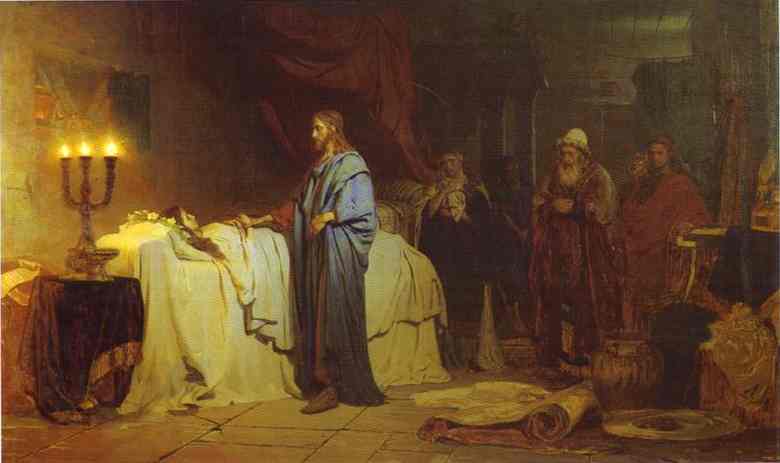
Hymn - "The Girl is Dead, The Mourners Weep"

The Girl Is Dead, The Mourners Weep
Tune: Komm, Gott Schoepfer
(“Creator Spirit, Heavenly Dove”
Hymn # 156 from Lutheran Worship)


The girl is dead, the mourners weep,
But Jesus says, “She only sleeps.”
Tenderly takes her by the hand,
“Talitha Koum!” our Lord commands,

A widow’s son, his funeral dirge,
With Jesus’ foll'wers come to merge,
The coffin touched, by Christ’s own hand,
“I say to you, arise, young man!”

When Lazarus, entombed for days,
The Lord said, “Take the stone away”
His pow’r o’er death, he leaves no doubt,
To Lazarus, Christ says, “Come out!”

As Sunday comes at break of dawn,
The mourners think he’s dead and gone,
But lo, he’s risen, he’s alive!
And now he lives, no more to die!

And at the font, Old Adam drowns,
Christ’s seal is placed upon our brows,
As Word and water cleanse all sins,
Our life eternal there begins.

Someday the trumpet blast will sound,
And all the vault of heav’n resound,
As Christ commands, once more to rise,
And takes us with him to the skies.


© Thomas E. Chryst, 2006.

Monday, June 26, 2006

Hymn - "The Lord Slept Peacefully at Sea"

"The Lord Slept Peacefully at Sea"
Tune: Tallis' Canon
(“All Praise to Thee, My God, This Night”
Hymn # 484 from Lutheran Worship)
Based on Mark 4:35-41


The Lord Slept Peacefully at Sea,
When his disciples made the plea,
“O, Teacher, can’t you see, we’ll drown?”
As wind and wave crashed o’er the bow.

Then Jesus rose and spoke his will,
To wind and wave, “Be Quiet! Still!”
His fearful foll’wers stood amazed,
As Jesus asked, “Have you no faith?”

O Lord, when swamped by sin and death,
We call on you with anxious breath,
And bid you waken to our prayer,
Calm us by your true presence there.

All praise to him who calms the storms,
Who loves, forgives, renews, reforms,
Who slumbered once in death’s cold sleep,
But rose to quicken us, indeed.


© Thomas E. Chryst, 2006.

Roman View of Luther


While doing some research on Luther as a favor to a friend, I came across the Roman Catholic site "New Advent" (of which many are already aware), and I found this interesting passage (below) in its entry on Martin Luther.

The part I bolded, I think, is actually a fair articulation of Lutheranism (though not complete, of course). Read the whole entry if you want a good headache.

Or, for a completely Christ-less treatment of their diagnosis of Luther (and a total migraine) read the entry on scrupulosity.

Of course this self-willed positiveness and hypochondriac asceticism, as usually happens in cases of morbidly scrupulous natures, found no relief in the sacraments. His general confessions at Erfurt and Rome did not touch the root of the evil. His whole being was wrought up to such an acute tension that he actually regretted his parents were not dead, that he might avail himself of the facilities Rome afforded to save them from purgatory. For religion's sake he was ready to become "the most brutal murderer", "to kill all who even by syllable refused submission to the pope" (Sämmtliche Werke, XXXX, Erlangen, 284). Such a tense and neurotic physical condition demanded a reaction, and, as frequently occurs in analogous cases, it went to the diametric extreme. The undue importance he had placed on his own strength in the spiritual process of justification, he now peremptorily and completely rejected. He convinced himself that man, as a consequence of original sin, was totally depraved, destitute of free will, that all works, even though directed towards the good, were nothing more than an outgrowth of his corrupted will, and in the judgments of God in reality mortal sins. Man can be saved by faith alone. Our faith in Christ makes His merits our possession, envelops us in the garb of righteousness, which our guilt and sinfulness hide, and supplies in abundance every defect of human righteousness. "Be a sinner and sin on bravely, but have stronger faith and rejoice in Christ, who is the victor of sin, death, and the world. Do not for a moment imagine that this life is the abiding place of justice: sin must be committed. To you it ought to be sufficient that you acknowledge the Lamb that takes away the sins of the world, the sin cannot tear you away from him, even though you commit adultery a hundred times a day and commit as many murders" (Enders, "Briefwechsel", III, 208). The new doctrine of justification by faith, now in its inchoate stage, gradually developed, and was finally fixed by Luther as one of the central doctrines of Christianity. The epoch-making event connected with the publication of the papal Bull of Indulgences in Germany, which was that of Julius II renewed in adaptable form by Leo X, to raise funds for the construction of St. Peter's Church in Rome, brought his spiritual difficulties to a crisis.

Sermon - Presentation of the Augsburg Confession - Romans 10:5-17

Presentation of the Augsburg Confession
(June 25th, 2006)
Romans 10:5-17
“Heart, Mouth, Feet, Ears”


Heart, Mouth, Feet, Ears. Perhaps a strange title for a sermon. But in our reading from Romans 10, Paul touches on all these parts of our bodies, in their various functions. And it all has to do with the good news of Jesus Christ, in whom we believe.


Today we also commemorate the “Presentation of the Augsburg Confession”. On June 25th, 1530, the teachings of the Lutheran Church were first publicly confessed in this historic document. I suppose most of us have never read the Augsburg Confession. Maybe you haven’t even heard of it. But it is foundational to our identity as Lutheran Christians, as its teachings give a true and clear summary of what scripture teaches. For instance,

“[our churches] teach that men cannot be justified before God by their own strength, merits, or works, but are freely justified for Christ's sake, through faith, when they believe that they are received into favor, and that their sins are forgiven for Christ's sake, who, by His death, has made satisfaction for our sins. This faith God imputes for righteousness in His sight.”

The early Lutherans confessed this faith before Emperor Charles V, the most powerful man in the world. And they showed a good understanding, and a courageous applications of the principle: that there is a connection between the heart and the mouth. What you believe is also what you say. They must have known well these words of Paul from Romans 10, “that if you confess with your mouth, “Jesus is Lord”, and believe in your heart that God raised him from the dead, you will be saved.”

Mouth and Heart
Confess with your mouth, believe with your heart. Heart and mouth. What’s inside of you, and what comes out of you. Yet both of these, we have a problem with. Both heart and mouth are sinful by nature. It’s why we pray, with the Psalmist, “create in me a clean heart, Oh God…”. It’s why we confess sins in thought and WORD and deed. Jesus said it’s not what goes into a man that makes him unclean, but what comes out. Cold, dead, sin-hardened hearts are within us. Mouths which speak with forked tongue, like wild beasts that need to be tamed. When it comes to our sin, we can see the clear connection of mouth and heart.

But in Christ, both heart and mouth are made clean. Both are forgiven, and set free from sin. So that while sinners, we are also saints. So that our heart does become the throne of God. So that our mouths are filled with his praises. So that we confess Jesus is Lord, and the faith that is within us.

All this is from Christ alone, of course, not from us. It is external. What comes into our heart at Baptism is the Holy Spirit. What we receive in our mouth – his body and blood for our forgiveness – these things make clean hearts and righteous mouths.

And so the mouth of the faithful also turns to the Lord in prayer, and “calls on the name of the Lord”. Paul’s word is God’s promise, that everyone who does so in faith will be richly blessed, and saved.

Heart and Mouth both have a hand in our salvation – and yet Paul isn’t done discussing important parts of the body…

Beautiful Feet
In the next paragraph, Paul emphasizes the importance of the one sent to bear the message, and quotes from Isaiah, “How beautiful on the mountain are the feet of those who bring good news!”

I remember clearly July 11th, 1999. It was the day of my installation as Associate Pastor here at Grace. President Ron Meyer was the preacher, and he used this very passage. He asked, rhetorically, if I had “beautiful feet”. And I remember being glad he didn’t ask to actually see them.

I don’t know about you, but I have always thought feet were ugly, as parts of the body go. Feet get a lot of abuse. They take the wear and tear of all our walking around. They get the dirt and filth of the ground on them. They are a “working” part of the body, and aren’t known to smell too good either. So to think of beautiful feet, well that’s not the usual picture.

But the point here is not about the feet. The point here is not about the one to whom the feet belong. No, those feet, and that messenger, they carry a message. And the news is so good that even the ugly feet that bring it are a sight for sore eyes. We who preach and pastor are not perfect, or beautiful or worthy of your attention in ourselves. But the message we bring is the best news you will ever hear. Those who share the Gospel of Jesus Christ bring something more beautiful and precious than all the world can offer. It’s a message of love, and hope, and forgiveness, and life. It’s beautiful.

Well, it’s ugly too. Who wants to think about the torturous death of an innocent man? Who wants to think about blood and beating, nails piercing hands and feet? The cross, a symbol used in ornate decoration, a symbol of our faith, the cross is really ugly if you think about what happened there. Ugly as sin. Because that’s what Jesus became for us – and sin is always ugly. And God’s punishment, his wrath over sin, is no pretty picture.

But the beauty is that Jesus, at the cross, put that ugliness away. Easter gives us a glimpse of the radiant glory that awaits each of us beyond the grave – when the beauty of Christ’s own life and righteousness shine in us forever.

We don’t know exactly what Jesus looked like – Scripture hints that he was an average looking guy, “he had no beauty or majesty to attract us to him, nothing in his appearance that we should desire him” But yet, “How beautiful on the mountain are the feet of those who bring good news!”

Faith Comes by Hearing
And that news comes to create and sustain faith. That faith comes by hearing the message. And the same God who gives the message gives us the ears to hear it. He gives the messenger that bears it. He puts it in our hearts, and moves us by his Spirit to confess it, so that others may also hear.

Hearing. It’s a simple thing really. Passive. You just sit there. And as the words are spoken, as the message is heard, faith comes. This much is clear. A simple reception of what the Lord gives. You don’t earn hearing. You can’t do it by yourself. Just like our salvation, which is beyond our own doing. What a joy and privilege to hear that word of faith again and again as we gather in God’s presence. What a blessing to hear the word and have our faith renewed.

Not all who hear believe. The Spirit moves when and where he desires. Some hear and reject. They close their ears for various reasons. But for those who have heard and do believe, we never stop hearing, and it never stops with the hearing. When ears have heard and heart believes, then feet move, and mouth confesses. Our whole being – every part of us – becomes captive to Christ and his purposes. And through people like us, God expands his kingdom.

And so we go where our feet take us – wherever that may be. Work, School, the mall, the cottage up north, wherever. And there we confess, as we are able, and as we have opportunity, the hope that is within us. We confess, Jesus Christ as Lord! We confess, that there is no salvation apart from him. We confess, that we are sinners, but that “a man is justified by grace alone through faith alone”. We confess that Jesus has done it all for me, and he wants you to believe it too. We confess in word and deed, and pray the Holy Spirit’s blessings on those who hear, and pray their ears and hearts are opened. We Christians confess, in Jerusalem, and Rome, and Augsburg, and even in Racine, Wisconsin.

Heart, Mouth, Feet, Ears. All are important gifts from God through which he works for our good and for others: hearing, believing, bearing and confessing, the message of Jesus Christ our Lord, we pray his continued blessings, in his name, Amen.

The Lord Jesus grants faith in our hearts, by the hearing of his word, that we might confess with our mouths the good news he brings!

Tuesday, June 20, 2006

Reality TV?

This one's just for fun...

What if the Bible were used for "reality TV" show ideas?

We might see....

REALITY programming?

The Bachelor: (in Australia, “The Bridegroom”) Roses are doled out left and right as our Bachelor explains – “They are all part of ‘the Bride’ – the men too!”

Fear Factor: Angel Gabriel as guest host, but loses his job after continually encouraging “Fear Not!” Next Week: Firey Furnace Challenge.

Average Joe: A Tax Collector, A Fisherman and a Zealot compete for top honors. Twist at the end. Last will be first.

The Biggest Loser: St. Paul makes his case: beaten, stoned, imprisoned, “thorn in the flesh”. Oh wait, this is about losing weight???

Joe Millionaire: Afterlife episode set in “Abraham’s Bosom”, special guest Lazarus. See how it ends!

Trading Spouses: Will the “She’s my sister” line work a 3rd time? Find out in this week’s episode.

Canaanite Idol: There are many “Idols”, but don’t be fooled! Go for the real thing.

The Apprentice: Elisha watches the boss’s dramatic retirement on our final episode. This one’s hot!

Extreme Makeover, Temple Edition: Don’t miss the action as this “Den of Thieves” gets the once-over.

Survivor: Screaming mob votes innocent man off the island. He declines to use his immunity. Instead, surviving after 3 days, offers immunity to those who sought his demise.

Monday, June 19, 2006

Mother, Child and Womb

Uh oh. Another mainline protestant body with a really bad idea.

Per FoxNews:

"BIRMINGHAM, Ala. — The divine Trinity — "Father, Son and Holy Spirit" — could also be known as "Mother, Child and Womb" or "Rock, Redeemer, Friend" at some Presbyterian Church (U.S.A.) services under an action Monday by the church's national assembly."

What's interesting to me is that "naming someone" is a sign of your authority over them. God called the light "day", and the dark "night". Adam named the animals (and woman, by the way). Parents name their children. Jesus was named by - only by God himself (through the angel)!

So what does it say when man (or the PCA) decides to re-name God? I'm sorry, I thought GOD got to name himself.

Maybe they can make a little extra money for the parish by auctioning off the naming rights to God for a year. "I baptize you in the name of Citibank, E-Harmony, and Starbucks!" Amen.

How would you have answered?

I just had an unusual Instant Messenger (IM) conversation with someone who contacted me out of the blue. Read our brief exchange below, and tell me, how would you have answered? I'm not sure I gave the best or the worst, but I think it's worth discussing:

candlelightman4: dose your church except gay im lookin for a church
Preachrboy: what do you mean

candlelightman4: sorry im new to area
candlelightman4: im agay man
Preachrboy: we believe active homosexuality is against the teaching of the Bible

candlelightman4: ok thanks
Preachrboy: no problem
candlelightman4: i just wonded thanks god bless
candlelightman4: sorry to bother you
Preachrboy: no bother
candlelightman4: have agreat day
Preachrboy: you too
candlelightman4: thanks

Sermon - Pentecost 2 - Mark 2:23-28

Pentecost 2 – (June 18th, 2006)
Mark 2:23-28
“On the Sabbath…”


I. Introduction –
“Observe the Sabbath day by keeping it holy, as the Lord your God has commanded you.” These words from our Old Testament reading, which we have come to know as the 3rd commandment, form the backdrop for our Gospel reading from Mark 2. There Jesus discusses with the Pharisees, the application of the command – and the reason the Sabbath day was given.
The word “Sabbath” literally means, “Seventh”. But it has come to mean also a “day of rest”. As we consider this in light of our own observance of the Sabbath, perhaps we can ask three fundamental questions about this holy day. The Sabbath, “When is it?”, “Why is it?” and “WHO is it?”

II. When is it?
-Creation and the first Sabbath
To understand the Sabbath day, we must go back to creation itself. In the first chapters of Genesis we read how God created the Heavens and the Earth, and everything in them, including man and woman, by his Word, in just 6 days. “On the seventh day, he rested from all his work” Furthermore, “God blessed the seventh day and made it holy, because on it he rested from all the work of creating he had done”. And so perhaps the first thing this 7th day of the week should remind us, is that the Lord created us and everything we see. And then, he rested.

-OT Sabbath observation
At Mt. Siani with the giving of the Covenant, observance of the Sabbath became a cornerstone of Israelite life. A time to rest, a time to gather, a time to read and hear God’s word. A “Holy Day” in the truest sense, a day that was “set apart” to dwell on those things “set apart”. Jesus also frequented the synagogue on the Sabbath day, as did the faithful believers.

-NT Sabbath on the “Lord’s Day”
But then a change took place in the observance of Sabbath. And if you’ve been wondering why we Christians don’t worship on the 7th day of the week, the answer is in the New Testament. There it is clear that the early Christians began to gather on Sunday, “the Lord’s Day” as it is called, to honor the resurrection of Jesus. For on the first day of the week, Sunday, Jesus conquered death and won the victory for us.

-Freedom to find rest in Christ any time
In fact, because Christians are now freed from the Old Covenant, which was fulfilled in Christ, we are able to find our rest in the Lord on any day. Still, the church honors Sunday for many good reasons, and it remains the chief day of gathering for God’s people. But Paul’s guidance in Romans 14 is well taken, “One man considers one day more sacred than another; another man considers every day alike. Each one should be fully convinced in his own mind. He who regards one day as special, does so to the Lord.”

So much for the “When?”. Perhaps a better question is, “Why do we have a Sabbath day?”

III. Why is it?

-To fulfill a law?
Since before Jesus time, man has sought to add his own laws to God’s law. And so the Jewish legalists over-defined the guidance of Moses so that even common tasks were considered work.

To this day, Orthodox Judaism concerns itself which such questions. When the Senator Joseph Lieberman, a practicing Orthodox Jew, was running for Vice President, questions were raised about how his observance would affect his ability to perform in high office – when on the Sabbath, strictly speaking, even turning out a light switch is considered work, and forbidden, by these laws.


But it’s not just the Jews who tend toward legalism. All of us born under the law and stricken with sin – we fancy legalistic lines, and man-made markers. If we can clearly define what is forbidden, you see, it leaves our consciences with a false sense of security. “Oh, all I have to do to keep this commandment is…. Not go to work on Sunday? Go to church once a week, or once in a while? As long as I don’t mow my lawn, I’m in the clear, right?” Why did God create the Sabbath day? Surely it was not to indulge our legalistic tendencies…

-Perhaps the Sabbath was created as a special day for us to do something nice for God, or give back to God?
Here again, we must say, “No!”. This goes against the grain of all we know from scripture about our sin and how it is dealt with. We won’t and we can’t possibly earn our way into God’s favor – not by a long list of good works, not by a keeping of commands, and certainly not by exacting performance of religious ceremonies.

Simply coming to church does not make you a good Christian anymore than going to a restaurant makes you a chef, or going to a football game makes you a Quarterback. It earns you no special brownie points with God, who doesn’t gain anything because you have graced him with your presence. “Oh, thank you SO much for coming! I was so lonely here without you, now let me give you blessings in return….” No, God is not impressed that you took an hour out of your busy schedule for him.

This day is not a benefit for him. It’s not really even a day to praise and honor and glorify God. It’s not a day to tell him how good he is, and how much we love him, and adore him, and honor him…. What does Jesus say? “The Sabbath was made for man” It is a day for OUR benefit!

What do we get out of coming to church, observing the Sabbath day?
- We get to see our friends? Christian fellowship is all well and good, but no, not the point.
- We “feel” better? It can be a good feeling to worship, but Sabbath observance is never based on mere human emotions
- We receive God’s gifts! Yes! This is it! This is what the Sabbath is about, why it was created for Man, why it is holy and blessed – to be a blessing to us! And the blessings of the Sabbath day lead us to our next question –
“Who is the Sabbath all about?”

IV. Who is it?
The Sabbath isn’t about us.
You might think so from Jesus saying, “the Sabbath was made for man” But not so! It is about Jesus Christ. For he is Lord of the Sabbath and he’s also the giver of rest for our souls. “Come to me all you who are weary and burdened, and I will give you rest” (Matthew 11:28). The Sabbath is all about Christ.

Jesus gives rest for the soul – rest from sin. His death on the cross paid the price, did the work to pay off the debt of our sin. And we are free and clear! His resurrection turns death into life, not just for him but also for us, and only in Christ can we truly “rest in peace”.


Jesus is the Lord of the Sabbath. Jesus is our Sabbath-rest. No the Sabbath day was never about the law, but always about the Gospel. Less a requirement than a blessing, less “you must…” than “we get to…”. The Sabbath was made as a day of rest for man to find his rest in Christ, who brings eternal, complete, and final peace… calm… rest.

It’s interesting to note that on the Sabbath, Jesus’ disciples we busy eating. They were hungry, and so they ate. So too, on our Sabbath we find food for our hungry souls. We find just what we need, in Christ.

And so, we Christians, come to gather in Christ’s name and presence. We come to hear rest from our sins – confessed and forgiven. We come to hear that rest in His word, read and proclaimed. We come to taste that rest in bread and wine that is true body and blood for our forgiveness. Fed and nourished, well rested, we depart in peace.

So remember the Sabbath day, keeping it holy. Remember we are free to find rest anytime – and all the time. Remember the Sabbath day, that it was made for man, not the other way around. And remember who the Sabbath day is about – not us, but Christ – who is our Sabbath rest.

V. Conclusion
“The Son of Man is Lord even of the Sabbath!” Thank God for this day of rest, and for Jesus Christ who gives us eternal rest. In His Name. Amen.

Thursday, June 15, 2006

June 15th, 1996


10 years ago Brenda and I were joined in Holy Marriage at St. Paul Lutheran Church in Greenwich, CT. Life has taken us many places since then, but God has blessed us both greatly along the way. And she is still the love of my life!

"A wife of noble character is her husband's crown" Pr. 12:4a

Wednesday, June 14, 2006

Wikipedia on LCMS

Was busy adding the Lutheran Blog Directory to the Wikipedia page on Lutheranism, when I found this interesting passage regarding the LCMS:

"There are internal struggles within the LCMS, but this, in turn, is prompting what is considered by some a new reformation within that body."

Reformation? Really?

Monday, June 12, 2006

Convention Part 2

Not much to report today. I left the convention early because I am suffering from a major head-cold or something. I also have little voice yet, and was not a voting delegate anyway. So I may or may not go tomorrow, but I will post here what I learn when I learn it.

The only resolution worth mentioning was the overwhelming passage of the "Ablaze! goals" for the district. 1.5 million is our "share" now, I suppose.

Oh, and some more of those resolutions made it back out of Omnibus, particularly the ones relating to the objectionable CCM opinions (the ones never dealt with by the last Synod convention). The floor committee returned them with some substantial changes from the overture's original intent. We will see what happens....